
Catalog All books

Anne-Marie Lugan Dardigna
Women of Literary Salon Feminism and the Literary Salon: Women in 18th-Century France
In France, the struggle for women’s rights is a very ancient one. In the 17th and 18th centuries it found expression in literary salons led by such famous figures as Madame de Tencin, Madame du Deffant, Madame Geoffrin and later by Madame du Châtelet and Madame d’Epinay.

Cécile David-Weill
Parents Under the Influence Are we condemned to repeat our parents' education?
Tools to help parents in everyday life, with recommendations and questionnaires. A helpful reflection that liberates us from guilt. A frank, far-sighted and practical guide that understands parents' needs

Jeanne Siaud-Facchin
Help Me to Live, Please!
With the energy and talent she is known for, Jeanne Siaud-Facchin proposes here less a new theory than a new practice of psychology...

Barbara Polla
The New Feminisms Struggles and Dreams in the Post-Weinstein Era
New light shed on feminism by a woman involved in the women’s movement. To find oneself in a galaxy of feminist currents. A reflection on the status of women.

Géraldyne Prévot-Gigant
The Power of an Encounter An encounter can change your life
A book that enables the reader to question him or herself about encounters, to understand their value, to find meaning and responses for better self-knowledge.

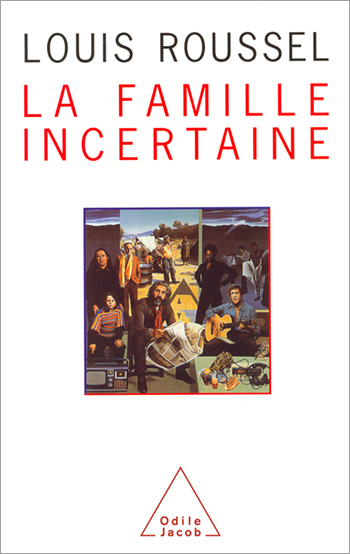
Louis Roussel
The Uncertain Family
Should we worry about the mariage and birth rates? Should we be reassured by the family values trend? Demographic data is never easy to interpret and because of the social changes within families, former theories must be revised and new approaches considered. L. Roussel attempts to draw an accurate picture of the future of our ever changing society.

Manès Sperber
Being Jewish
A non-practicing Jew, Manès Sperber learned to read the Bible at the age of three and continued to re-read it until the end of his life. Neither religious, nor a militant Zionist, nor an aethiest, nor aligned with any cultural Judaism, he professes as his only faith a "religion of good memory." His is a Judaism lived as humanism and as an ethic, as a refusal of all idolatry, of exclusion of others, and a constant combat against hate of any kind. It is a profound attachment to the Israelite nation and a prudent attitude towards the State of Israel that Sperber illustrates in these brilliant essays prefaced by Elie Weisel, where analysis of Jewish thought and identity walk hand in hand with the eternal question: Why anti-semitism?