
Catalog All books
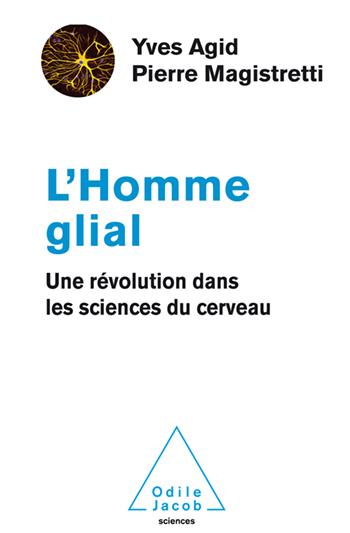
Yves Agid, Pierre Magistretti
The Glial Man A Break in Neuroscientific Thinking
A strong thesis with three-fold implications: a new way of understanding the functioning of the human brain; new bases to better diagnose neuro-psychiatric pathologies; new paths for research into treatments against these diseases.
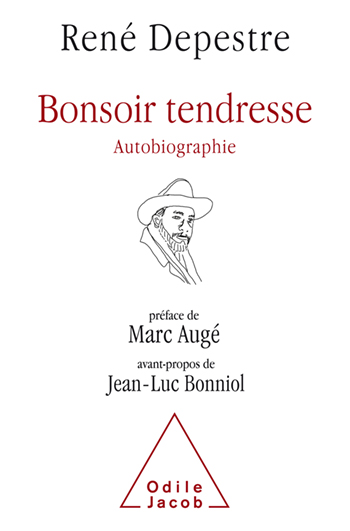
René Depestre, Marc Augé
Good Evening Tenderness
The life of an intellectual, revolutionary, and adventurer. An important figure in the négritude movement, alongside Aimé Césaire and Frantz Fanon. An original reflection on identity and skin color. A look back on his revolutionary dreams and the Cuba regime, in the time of Castro and Che.

Jean-Pierre Hansen, Jacques Percebois
Electricity in Transition What Europe and the markets couldn’t tell you
The history of electricity as you’ve never heard it before. A genuine mini-guide to economic issues through the example of electricity: price formation, transmission costs, monopolies.

Stanislas Dehaene
A Good Head for Maths
Did you know that babies can count? And did you know that some animals can do simple arithmetic? Whether we possess astounding mathematical talents or the most basic of counting skills, we are all born with numerical intuition. In this book, the author describes some amazing scientific experiments that demonstrate the mental foundations of numerical intuition. If you want to know why you cant remember how much 7 x 8 makes, or how a cerebral lesion can make you forget 3 - 1, or if you want to figure out the fifth root of 759,375, just follow the author in a series of tortuous mental calculations and you dont even have to be a mathematical wizard. Stanislas Dehaene is a senior research fellow at Inserm and works at the Laboratory of cognitive sciences and of psycholinguistics at the École des Hautes Études en Sciences Sociales.
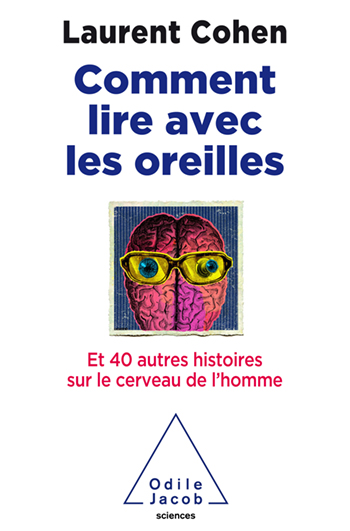
Laurent Cohen
How Do You Read With Your Ears? And 40 other stories about the human brain
The new book by one of our most brilliant neurologists gives us a concise and comprehensive overview of the latest advances in neuroscience. Forty short, strange, entertaining but always instructive stories about the functioning and dysfunctioning, ordinary or extraordinary, of our brain.
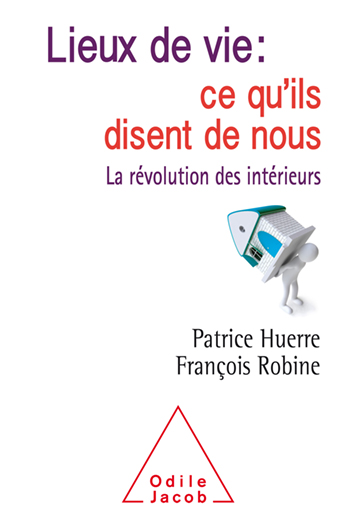
Patrice Huerre, François Robine
What Our Living Spaces Say about Us
Living spaces tell a lot about their inhabitants and their psychic and social evolution. Habitats reveal the evolution of generations and of their ways of life, but they also encourage human relationships to be what they are.
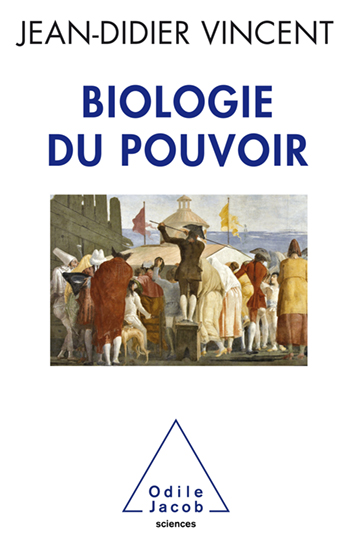
Jean-Didier Vincent
The Biology of Power
How biology explains what is going on in the brains of leaders, and in those of their subjects… Told by J-D Vincent, the strange ballet of emotions that connect power, sex, and violence.
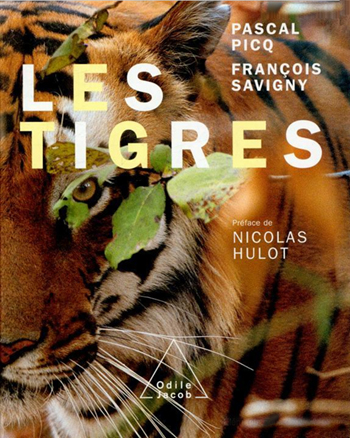
Pascal Picq, François Savigny
Tigers
The tiger is charged with symbolism. In myth and poetry it represents untamed force that can strike suddenly; it can appear stealthily out of nowhere, and vanish just as suddenly.
Nicolas Offenstadt
Shot at Dawn : The Executed of the Great War And the Collective Memory (1914-1999)
Why were some soldiers tried and executed by their own military authorities during World War I? Using previously unpublished source material, the author has been able to throw light on one of the most sombre episodes of the Great War. Besides reviewing the history of the events themselves, the author also examines the struggle with the military authorities to clear the soldiers names, beginning in the period between the two world wars. By the 1960s, the public image of the executed soldiers had begun to change. It would culminate in the British campaign to grant them an official pardon and in the French decision to remember them a ceremony. How, he asks, did these changes come about? Nicolas Offenstadt is a graduate of the Institut des Etudes Politiques, in Paris. He holds an agrégation in history and is a member of the Thiers Foundation.
Patrice Queneau, Claude de Bourguignon
Saving the General Practitioner
A powerful argument for keeping medicine human, citing the general practitioner as the guarantor. A book that can contribute to the debate on healthcare, and one that will find a favourable reception among general practitioners.
Alain Bauer, Marie-Christine Dupuis-Danon
The Bloodhounds: A Story of the French Intelligence Services in Their Own Words
Interviews with the great leaders in French Intelligence. These interviews break with a culture of secrecy; what the leaders say in no way glosses the difficulties, or the missteps, of the Services, or the manipulations that occur for reasons of high-level – or low-level – politics.
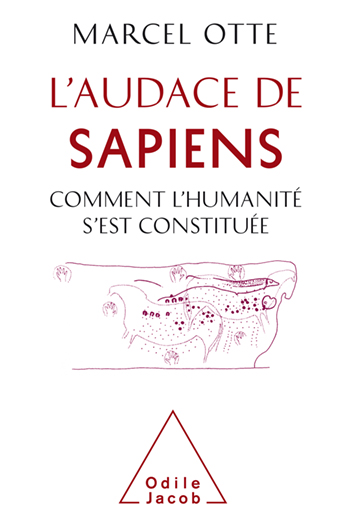
Marcel Otte
The Audacity of Sapiens: How Humanity Was Formed
It is time to bring back thought, responsibility, and courage to a consideration of the prodigious human adventure.
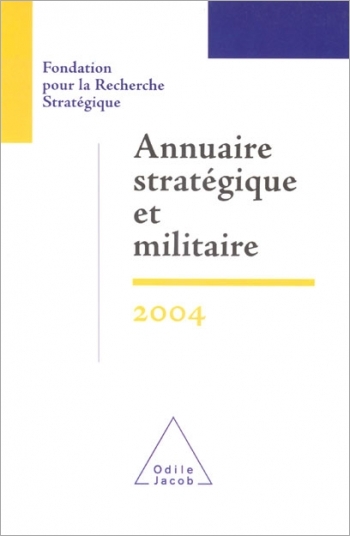
Fondation pour la Recherche Stratégique, François Heisbourg
Strategic and Military Yearbook 2004
As the consequences of U.S. involvement in Iraq are making themselves felt worldwide, and as the U.S. presidential campaign comes to a climax, this book provides a timely survey of the changing strategic and geopolitical landscape. The articles included here, written by some of the top experts in their fields, evaluate the repercussions for all of us of developments in the world's most powerful nation; they also examine the so-called clash of civilisations and consider the real risks of such a clash. This is an indispensable, complete and informed book that will enable readers to understand present and future changes in the global situation. A veritable gold mine of information, the Annuaire stratégique et militaire provides an annual examination of France's defence situation and allows a comparison with France's partners. François Heisbourg, an internationally renowned specialist in international and defence issues, is the director of the Fondation pour la Recherche Stratégique (FRS) and president of the International Institute of Strategic Studies. He is the author of Hyperterrorisme: la nouvelle guerre (2001) and the editor of Annuaire stratégique et militaire 2002 (English edition: French Strategic and Military Book) and Annuaire stratégique et militaire 2003, all published by Editions Odile Jacob.
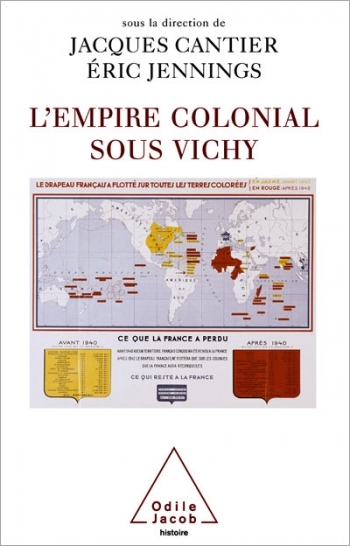
Jacques Cantier, Éric Jennings
The French Colonial Empire under Vichy
In the 1990s, historians began studying the Vichy government in the French colonial empire. The articles gathered here by Jacques Cantier and Eric Jennings are the outcome of recent exchanges among historians on the subject. The book reflects the writers' various research interests and includes: an examination of the political decision-making process, the composition of governing bodies, the development of institutions to strengthen government control of society, and the reaction of the local population to the new political measures. The editors' purpose is dual. First of all, the colonial mirror serves to elucidate the underlying logic and the workings of the regime that resulted from the French defeat. Secondly, the editors have sought to place the Vichy period into the wider context and more extended time frame of colonial history and decolonisation. They have done this by structuring their analysis of Vichy in the empire into several sections. The first part of the book examines the conditions under which the Vichy government tried to unite the colonial bloc to mainland France. The second part analyses Vichy's authoritarian policies, particularly those that aimed at controlling youth. The large demonstrations that took place in Vichy Algeria in 1941 illustrate the efforts undertaken to showcase the National Revolution in Algeria. The third part studies the different forms of repression exercised by the regime, particularly the conditions governing the application of anti-Semitic legislation in the empire, the stifling of the Masons, and the existence of internment camps in North Africa. The fourth part reveals the tactics used by the European and colonial elites in French West Africa (Afrique Occidentale Française) to preserve their influence. The Vichy legacy is examined in a final section, which provides both an overview of the situation in the empire as a whole and a detailed analysis of the telling example of Madagascar. This is a unique and highly innovative study by eminent historians of a little-known aspect of French colonial history during the Vichy period. Jacques Cantier is a lecturer at the University of Toulouse-Le-Mirail, France. He is the author of L'Algérie sous le régime de Vichy and Jules Roy: l'Honneur d'un rebelle. Eric Jennings is an assistant professor at the University of Toronto, Canada. He is the author of Vichy in the Tropics.