
Catalog All books
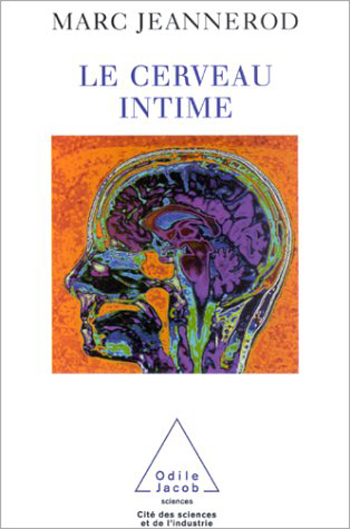
Marc Jeannerod
The Intimate Brain
Today, the brain has ceased to be regarded as existing in isolation in the human body. It is now considered in relation to its sensory, emotional and cultural environment. This book asks the question of what are the mechanisms and chemistry of the emotions? How do emotional states and the consciousness of those states permeate memory and thought? How does depression affect the emotions, and how can it be treated? How is the consciousness of self and of others constructed? Marc Jeannerod teaches physiology at the University Claude-Bernard-Lyon-I, and is the director of the Institute of Cognitive Sciences.



Didier Pleux
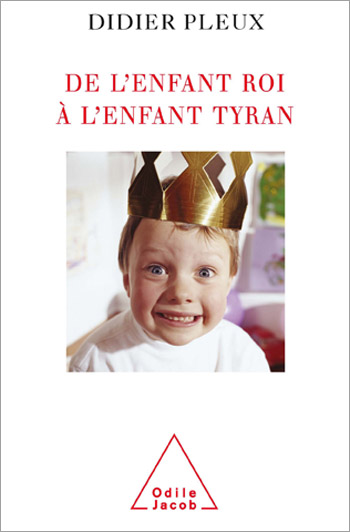
From the King Child to the Tyrant Child
More and more parents are faced with what amounts to a power take-over by their children. The tyrannical child makes constant demands, uses his parents for his own ends and creates a climate of psychological violence. The solution lies in education coupled with authority. This is a lively, clear and polemical work which shows parents how to redefine their parental authority and should enable them to feel less anxious. Besides offering practical psychological advice, it also provides an examination of what living in society means. Didier Pleux is a clinical psychologist
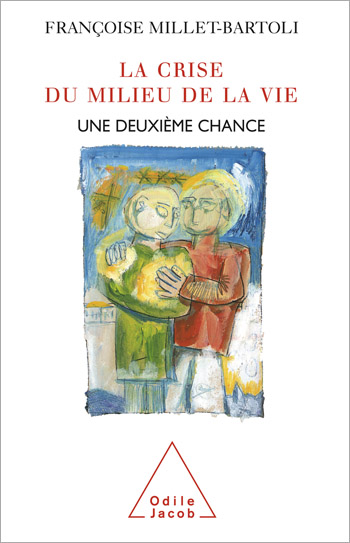
Françoise Millet-Bartoli
Mid-Life Crisis A Second Chance
In France, the notion of a mid-life crisis remains relatively little known. And yet, just like childhood and adolescence, mid-life is a specific age characterised by a distinctive psychology and, sometimes, psycho-pathology. This often-feared time of life, governed by major personal changes, can also be a period of true rebirth if the mid-lifer learns how to deal with the changes, by being informed and knowing how to react. This book focuses on what mid-lifers can do to live in greater harmony with themselves. Françoise Millet-Bartoli is a psychiatrist and psychotherapist and teaches at the medical faculty of Toulouse.
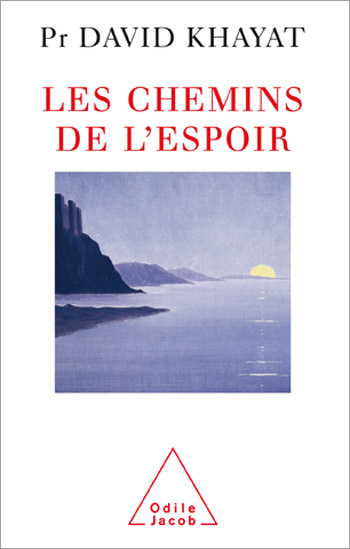
David Khayat
The Paths of Hope
The progress made in cancer research and the advances in therapeutics have become such that they open before us, without any doubt, marvellous paths towards hope. It is these paths that I suggest we discover together. David Khayat David Khayat is a professor at the Pierre-et-Marie-Curie University and the head of the cancer team at the La Pitié-Salpêtrière Hospital.



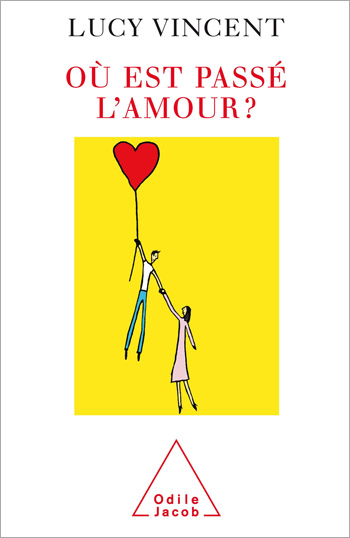
Lucy Vincent
How to Fall in Love
What if love was one of the best magic tricks invented by evolution ? A far cry from the soppy, and rose-tinted fairy tales of our childhood, Lucy Vincent invites us to discover, with her both humorous and emotive approach, the true face of love its ruses, its calculations, but also its charm, its fun, and at the end of the day, its essential beauty. An indispensable read for those who wish to know the hidden aspects of love, and a useful tool to help master the strategies and language of love. A doctor in neurosciences, Lucy Vincent is equally a scientific editor at Radio France.

Thierry Lévy
In Praise of Judicial Barbarity
In March 2004, France instituted a special legal procedure, to be applied in infractions judged as serious, as part of an effort to give police more powers to combat new types of crime. If money-laundering and giving assistance to illegal immigrants may be regarded as relatively recent infractions, stealing, murder, procuring and counterfeiting are all ancient violations. The new procedure extends the powers of police to hold prisoners in custody; it will also allow some offenders who plead guilty and accept the public prosecutor's sentence to avoid a public trial. Thierry Lévy, a renowned criminal lawyer, shows that the new law only confirms a tendency that has been at work for a long time, since many trials are no more than empty ceremonies sanctioning decisions that have already been reached. The author examines the way Justice in France today functions and puts some current dysfunctions of the legal system in their historical perspective. He argues that Justice cannot be served if the rights of the defence are ignored. Thierry Lévy is a lawyer and a member of the Paris Bar. He is the author of Justice sans Dieu and the co-author, with Jean-Denis Bredin, of Convaincre.
Roger-Pol Droit
The Company of Philosophers
Roger-Pol Droit takes the reader on a voyage through time, spanning the centuries from Antiquity to the present, in a series of intellectual portraits of great and usual or remarkable thinkers, beginning with Socrates and Plato and ending with Michel Foucault and Gilles Deleuze. A major part of this volume is devoted to modern philosophers, from Kant to Heidegger. The author's goal is to stimulate new thought and to bring to life for the reader the vital ideas of past thinkers.

Robert Ladouceur, Lynda Bélanger, Éliane Léger
How to stop worrying about everything and nothing
Take the time to breathe deeply. Control your stress. Stop worrying about everything. Thats what youd like to do, but you believe that, for someone with an anxious temperament like your own, this is impossible. However, this 220-page book shows how you can overcome chronic anxiety. Included here are quizzes, questionnaires, examples and exercises - everything that you need to help you make the change and live a better life. A psychiatrist and psychotherapist, Robert Ladouceur is a professor of psychology at Laval University in Quebec City.