Catalog All books
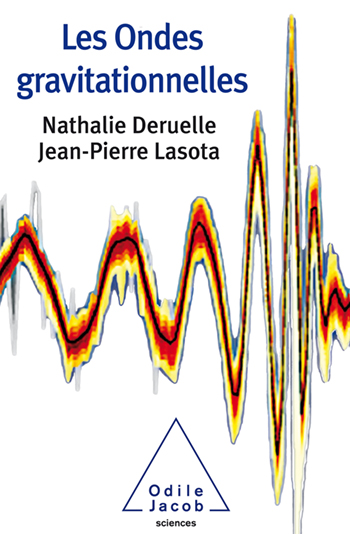
Nathalie Deruelle, Jean-Pierre Lasota
Gravitational Waves
An extraordinary, theoretical, and experimental saga told by two of the protagonists, or how a purely theoretical notion became a physical reality. A revolution: telescopes now observe in gravitational waves also! Astronomy of the future will be gravitational.
Alain Bécoulet
Nuclear Fusion
The great hope in the realm of energy transition: fusion produces almost no radioactive waste, and doesn’t emit CO2. . .

Uta Frith
Autism: Explaining the Enigma
Why do certain children live walled in by silence, cut off from the world and others? For the first time, this book offers a general theory on autism, a profound disorder in cognitive development rather than one resulting from family conflict or an attention deficit. Uta Frith is a psychologist and member of a cognitive development study group at the Medical Research Council of Cambridge.
Antonio R. Damasio
Descartes' Error Emotion, Reason, and the Human Brain
Being rational is not denying oneself emotions. The brain which thinks, calculates, and makes decisions is not a different entity to the one which laughs, cries, loves, and experiences pleasure and annoyance. The heart has reasons that reason itself is far from being ignorant of. In opposition to the old Cartesian dualism and to all those who wish to reduce the functioning of the human mind to detached calculations worthy of a supercomputer stands the results of the latest neurological research : the absence of emotions and sentiments prevents us from being really rational. Antonio R. Damasio heads the department of neurology at the University of Iowa, in the United States, and teaches at the Institute of Biological Studies of La Jolla.
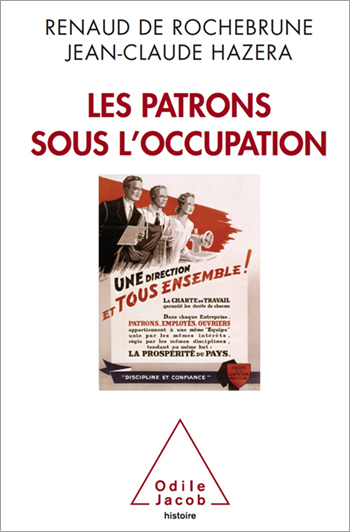
Renaud de Rochebrune, Jean-Claude Hazera
Business Leaders During the Occupation
How were Jewish companies altered to become Aryan ones and what was the role of French administration? Who did illegal profits and how?A fascinating document written by two journalists.


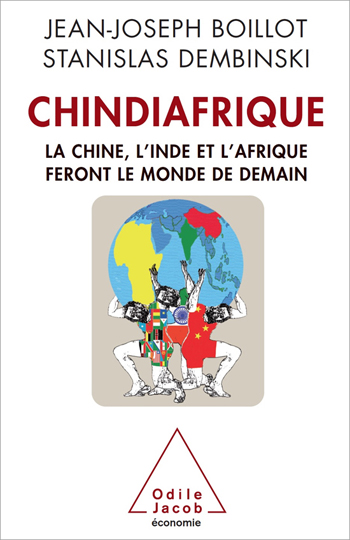
Jean-Joseph Boillot, Stanislas Dembinski
Chindiafrique The Three Giants That Will Make Tomorrow’s World
An indispensable essay on future economic trends for anyone wishing to understand tomorrow’s world
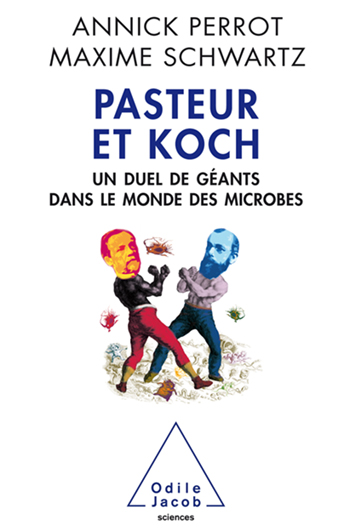
Annick Perrot, Maxime Schwartz
Pasteur et Koch A Duel Between Giants in the Microbial World
The tale of the rivalry between two great scientists engaged in the race to conquer infectious diseases, told against the historical backdrop of rising nationalism
Didier Houssin
Against the epidemic risk
A warning, an analysis and some proposals to protect the world’s future inhabitants
Jacques Lesourne
A Pragmatic Approach to the Way of the Future How can we innovate and bring about change in society?
The originality of the author’s method, i.e. drawing the outlines of the world of tomorrow, and based on this futurist perspective, defining the changes that need to be made.
Catherine Clément, Tobie Nathan
The Couch and the Grigri
This work is a fascinating discussion between a practising analyst who has not ceased to confront his discipline with other disciplines of the mind, and a philosopher with great psychoanalytic experience. It aims to show how cultural heritage a debt linking each generation to its ancestors shapes both how we represent reality and our emotional universe. The authors thoughts and conclusions are thoroughly backed up with a variety of specific examples and observations. Tobie Nathan is an ethno-psychologist and teaches clinical and pathological psychology at the University of Paris VIII. Catherine Clément is a writer and philosopher.
Annick Le Guérer, Bruno Fourn
Scents and Sound, an Unexpected Association
The mysterious voice-scent synaesthesis
Jacques Hochmann
Degeneration Theories Psychiatry and History
The unbelievable story of a mad psychiatric theory centered on the idea of heredity which was put to the most horrible of uses, while having a lasting effect on mentalities.
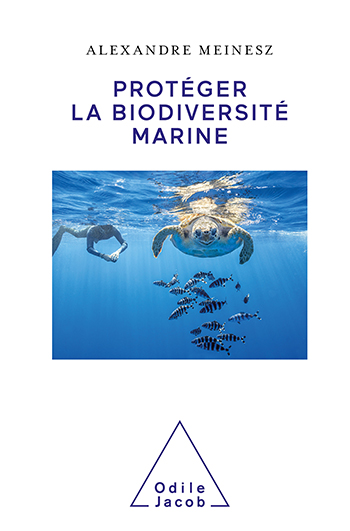
Alexandre Meinesz
Protecting Marine Biodiversity
A new approach to the threat of pollution in the Mediterranean by an expert in Mediterranean marine life.
Alexandre Stern
Who Are You, Homo sapiens? Understanding Our Nature In Order to Live Better
After telling how the art of cooking had humanized, civilized our ancestral apes, Alexandre Stern explores the roots of our humanity to better examine our modern practices and ways of life.
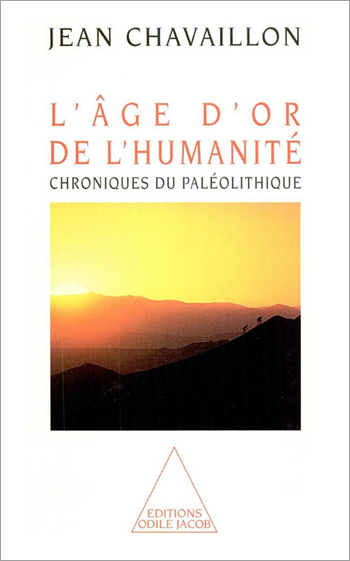
Jean Chavaillon
The Golden Age of Humanity Annals of the Palaeolithic Age
If myths tell the story of civilizations without writing, the myth of the golden age corresponds to a very precise period in the story of mankind: the superior paleololithic (between 35,000 and 9,000 B.C.). Even though different species of hominides coexisted in the same territories of Africa, there were no wars. Human groups were rare, they lived in an environment of abundance. They had time. Without art or religion, their life was carefree. All their knowledge was concentrated on the making of tools and in the mastering of fire. This is the everyday life of men from the Paleolithic which Jean Chavaillon describes in this fascinating book, illustrated by black and white reproductions. Jean Chavaillon, is a research director at the CNRS, a specialist in prehistory and a field worker.

Jean-François Gayraud
A New Criminal Capitalism Financial crises, money laundering, high-frequency trading
How crime creeps into the heart of the global financial system — and perverts it

Daniel Sibony
The Issue of Being
What is Being? An Exchange Between the Bible and Philosophy, Heidegger and the God of Moses
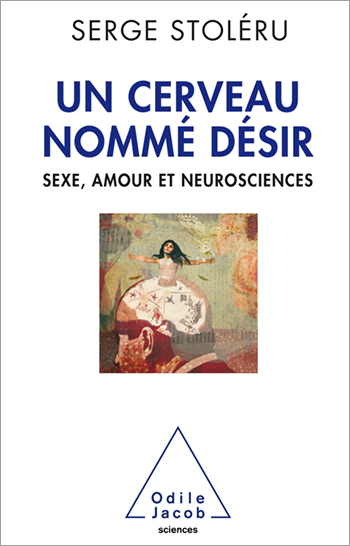
Serge Stoléru
A Brain Named Desire Neuroscience, sex and love
This book follows the route that has led to a better understanding of sexual desire and love: from psychology to neuroscience, passing through attachment theory, ethnology and the theory of evolution.
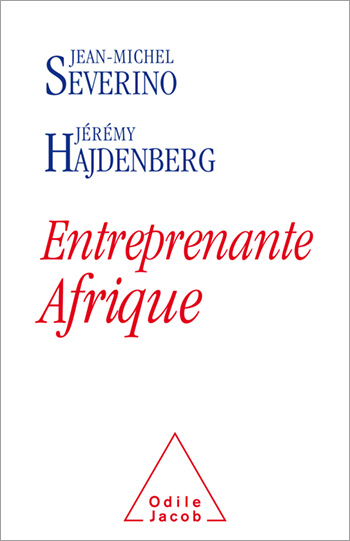
Jean-Michel Severino, Jérémy Hajdenberg
Afrique entreprise Africa invents its own growth model
A richly illustrated book, which intelligently combines a detailed examination of companies and business sectors with a macroeconomic approach to strengths and weaknesses of growth.