Catalog All books
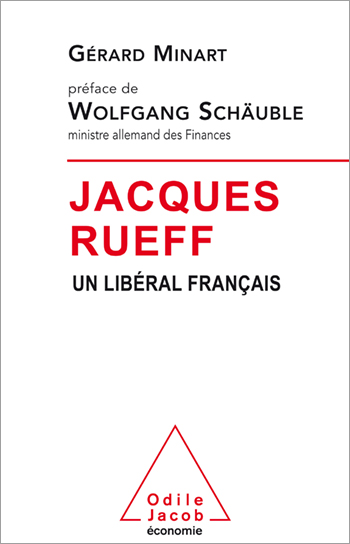
Gérard Minart
Jacques Rueff A French Free-market Economist
An influential French free-market economist and adviser to President Charles de Gaulle

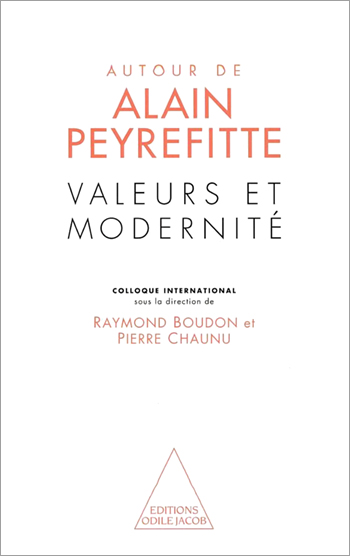
Alain Peyrefitte, Raymond Boudon, Pierre Chaunu
Values and Modernity Expanding on Alain Peyrefitte
With The Society of Confidence, and Of the Economic Miracle, Alain Peyrefitte has illustrated that growth is not primarily founded on the material wealth of a nation, capital, or even on work. Development is intrinsically linked to mentalities and values, which are the essential elements of economic, political and social modernity. Using this thesis as a starting point, the Institute of France organised a conference which brought together economic and technological historians, sociologists, criminologists, and experts from across the world, amongst which were R.Boudon, S.Eisenstadt, D.Landes, and S.Lipset. The wide spectrum of debate runs from the history of religious mentalities (P. Chaunu, J.Delumeau), to penal philosophy (D. Szabo). The comparative outlook of this book allows the reader an insight into the hidden depths of confidence, from Switzerland (J.-F. Bergier), to Japan (Terushi Hara), right through to the Third World (P. Moussa).

Anne Nédélec
The Earth and Life: A 4 billion Year History
The evolution of the Earth and life over 4 billion years.
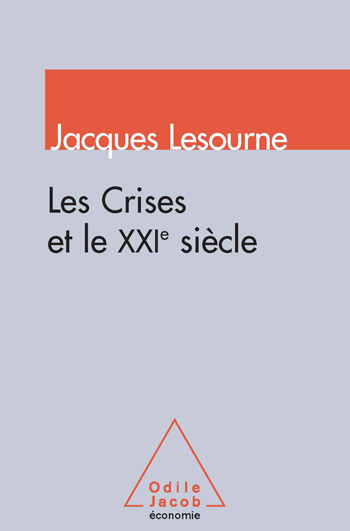
Jacques Lesourne
Rethinking the 21st Century Through Its Crises
Global warming, melting ice caps, the Middle East conflict, Chinese economic development, extreme poverty in Darfur, decreasing biodiversity: hardly a day goes by when these subjects are not in the news...

Paul Garde
The End of the Century in the Balkans
Fortunately, the situation is less tragic in 2000 than it was in 1992. There is no more fighting. And yet, none of the problems have been resolved and several conflicts remain pending. In two regions, Bosnia and Kosovo, peace is maintained thanks to a powerful international presence; hundreds of thousands of refugees have no hope of returning to their homes; most of the main criminals of war are still at large; and intolerance and poverty are widespread. It is thus necessary to make a correct diagnosis of the problems of the region, where surprises are always possible. I would be happy if this book could help contribute toward this. Paul Garde Paul Garde is a former professor of Slavic languages and literature at the University of Provence, France.
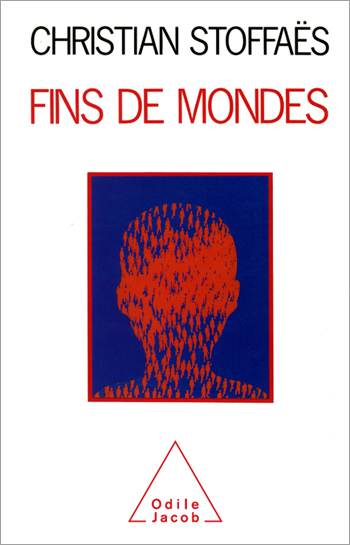
Christian Stoffaës
Ends of Worlds
An economic pulse sustains life in the modern world. C. Stoffaës investigates the highs of economic boom and the lows of paralyzing depression. He presents an historical survey of our dominant technological and mental structures from Keynes to Schumpeter, from the steam engine to the microchip, from the American golden age to the new Pacific prosperity.
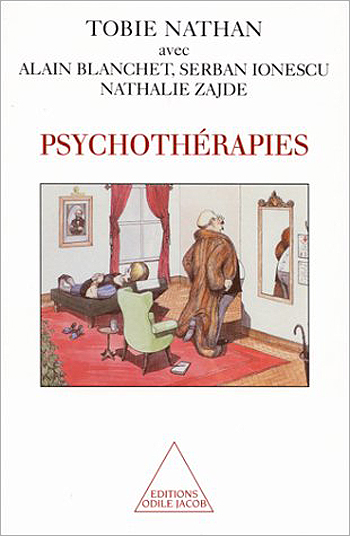
Tobie Nathan, Alain Blanchet, Serban Ionescu, Nathalie Zajde
Psychotherapies
This book is a rigorous presentation of what is now called the Nathan method, that is to say the therapeutic methods (using objects or discussion) which result in a cure through that influence. Using the differences between Western and African techniques as a starting point, he explains how following a psychotherapeutic treatment, or consulting an African healer constitutes an affiliation to a certain group. That is not to say, however, that all therapeutic methods are the same. On the contrary, this book tries to define some kind of criteria of evaluation which is conducive to an informed choice. The two main elements of psychotherapy, the therapy and the trauma, in other words the object and the motivation of the sick person for taking the step of getting treatment, are re-examined in this new context.

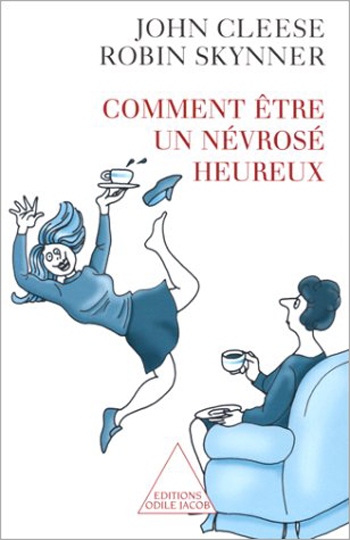
John Cleese, Robin Skynner
Life and How to Survive It
In Life and How to Survive It, the authors have given us more than 400 pages of lively, tonic humour. Their subject is the joy of living and the conditions required to enjoy life to the full. Proceeding by ever-larger concentric circles, the authors successively discuss happy families (brilliant!), companies that allow their employees to fulfil themselves, and finally countries where life is pleasurable. This is British humour at its best, brilliantlyand hilariouslyillustrated. British comic actor John Cleese is famous for the cult television series Fawlty Towers, which he co-authored and starred in. Robin Skynner is a psychotherapist specialising in group therapies.


Alain Dupas
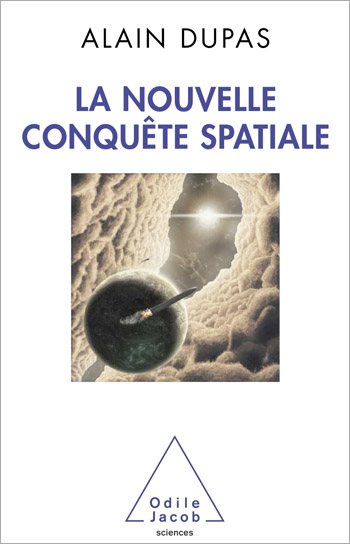
The New Spatial Conquest
The desire to explore our solar system, with robots and especially with men and women, has become a global one. A new page in the lengthy history of relations between humans and the cosmos is already being written.

Denis Knoepfler
Narcissus and the Greek City
In this remarkable, erudite and beautifully written investigation, a renowned expert in Ancient Greek history sets out to uncover the true historic origins of a familiar figure from Greek mythology — Narcissus.
Jacques Ninio
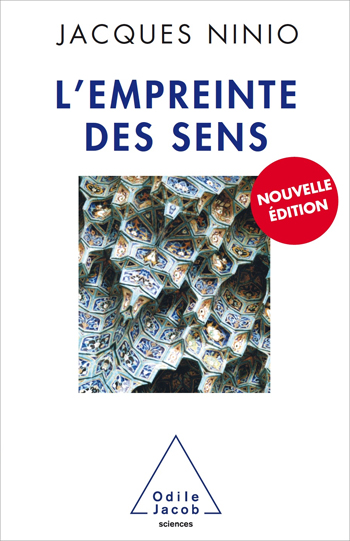
The Print of the Senses
What is perception? What is the world around us really like? These are the questions that Jacques Ninio examines here, in this completely revised new edition of his highly successful work.
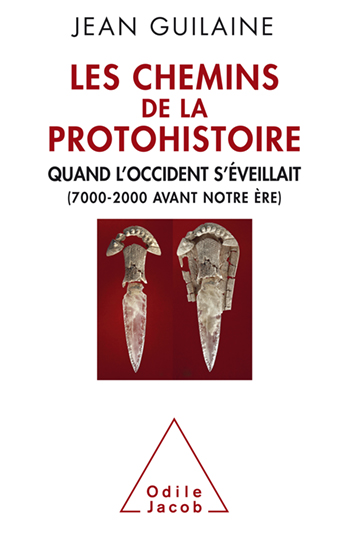
Jean Guilaine
Protohistory The Awakening of the West (7000-2000 BCE)
An original, in-depth, richly-documented study of menhirs and dolmens, of the “religion” of the people of the Neolithic, of the origins of political power, and of the organization of social hierarchy
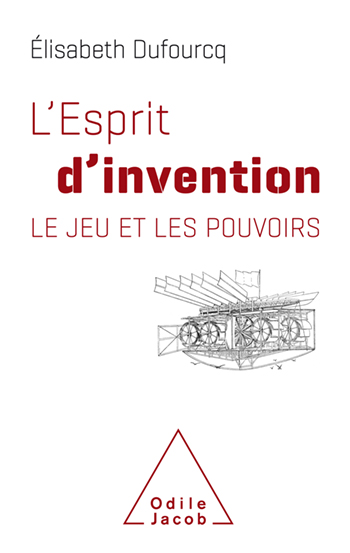
Élisabeth Dufourcq
The Spirit of Invention Power Play
A masterful panorama of the great scientific inventions. Much more than a history of science, an inquiry into the scientific mind, the logic of discoveries, the innovative strength of science.