
Catalog All books
Alain Berthoz, Claude Debru
Anticipating and Predicting A Colloquium — From Thought to Mental Journey
What are the psychological and neurobiological mechanisms that enable humans to anticipate events and actions?

Vincent Trybou, Baptiste Brossard, Marianne Kedia
Self-harm Understanding and Treatment
The first book to offer a complete and pragmatic approach to the treatment of self-harm behavior
Erik Brynjolfsson, Andrew McAfee
Machine, Platform, Crowd: Harnessing Our Digital Future
How does the digital revolution enable a new integration between the human mind and machines?



Jean-Pierre Changeux
The Beauty in the Brain
"Jean-Pierre Changeux is one of those rare spirits who both challenge and unify." A text containing ideas that are entirely new. Illustrated with many original case studies from the arts and sciences.


Jacques Lesourne, Denis Randet
Research and innovation in France 2016 Futuris 2016
The tenth annual instalment in a series dedicated to research and innovation.

Susan Quinn
Marie Curie New édition
Going beyond the legend, this biography, entirely based on documents in the archives, brings alive the picture of a captivating woman, whose life reads like a novel. Susan Quinn is a biographist and journalist.
Jacques Lesourne, Denis Randet
Research and Innovation in France FutuRIS 2009
The present work is proposed by FutuRIS (Future, Research, Innovation, Society), a study programme on research and innovation developed within ANRT.


Vinciane Pirenne-Delforge, Lluis Quintana-Murci
Civilizations: Questioning Identity and Diversity: Autumn Colloquium of the Collège de France
The noun “civilization” entered Western European vocabulary in the Eighteenth Century, and at that time denoted a stage of material, social, and cultural evolution...

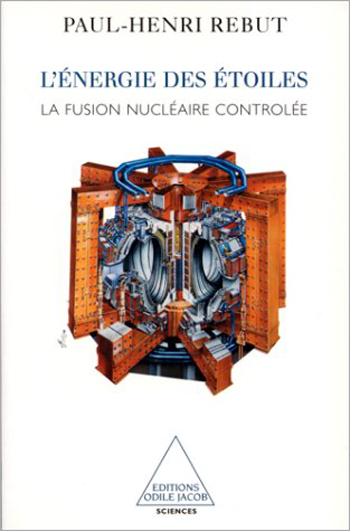
Paul-Henri Rebut
Energy of the Stars Controlled Nuclear Fusion
Nuclear fusion can be likened to God or the devil. Out there among the stars, it is godlike, creating atoms and giving birth to life. But down below, on earth, nuclear fusion is the devil: it has been used to make bombs that can annihilate everything, including all forms of life. Now that the devil of thermonuclear destruction seems to have been locked back in its box, nuclear fusion kept under tight control in civil reactors offers the hope for long-term economic development. Isnt it the only inexhaustible, non-polluting form of energy that offers no limits except that of human technical knowledge? Paul-Henri Rebut is a member of the Academy of Science.