Catalog All books
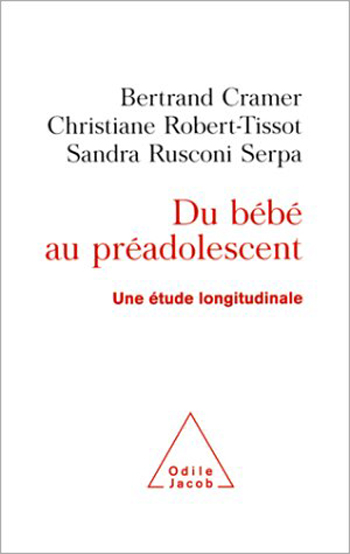
Bertrand Cramer, Christiane Robert-Tissot, Sandra Rusconi Serpa
From Baby to Preadolescent A Longitudinal Study
In 1991, 103 mother-and-infant pairs visited Genevas Guidance Infantile. The infants all displayed functional and behavioural disorders. Ten years later, the same mother-child pairs were re-evaluated by Professor Cramers team, who was thus able to make a number of prospective analyses. What became of the symptoms that the infants had first presented? Did any of the symptoms first displayed indicate a predisposition to other disorders? Can the characteristics that helped them to endure be identified? And what can be said of the role played by cognitive development and parental representations, as well as by protective factors? Professor Bertrand Cramer is a child psychiatrist.
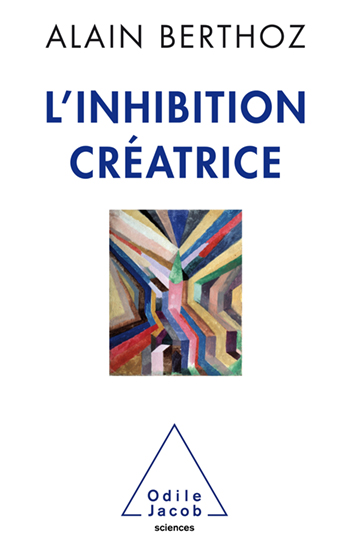
Alain Berthoz
Creative Inhibition To act is also to inhibit
A neglected concept, inhibition holds the key to our individual and social behaviors. A broad bio-sociological panorama for observing human behavior with fresh eyes.
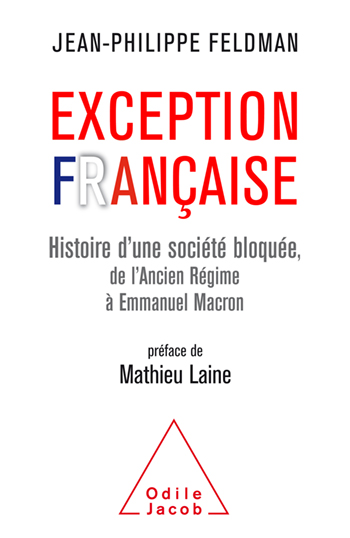
Jean-Philippe Feldman
The French Exception From the Ancien Régime to Emmanuel Macron, the story of a blocked society
Abundant historical documentation used to address a current issue and a very heated polemical debate.
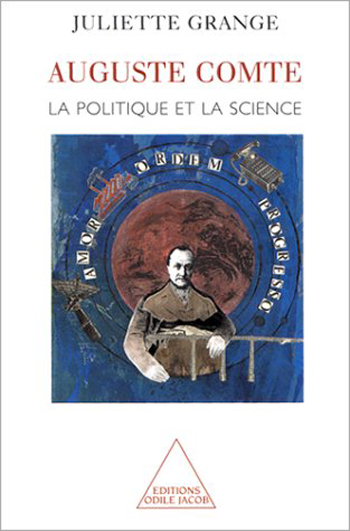
Juliette Grange
Auguste Comte - Politics and Science
The writings of Auguste Comte are often reduced to a few excerpts and stereotypes, and as a result the judgement of "positivism" is quickly reached. Yet, industrial politics, the organisation of research, and the influence of the exact sciences on the way we regard politics, all eminently modern themes, lie at the heart of his thought. Therefore, this book, by one of the best French specialists, offers an original rereading of Comte and ultimately opens the way for a more personal reflection on the nature of the relations between science and politics as they exist today. Juliette Grange is a professor at the University of Nancy-II
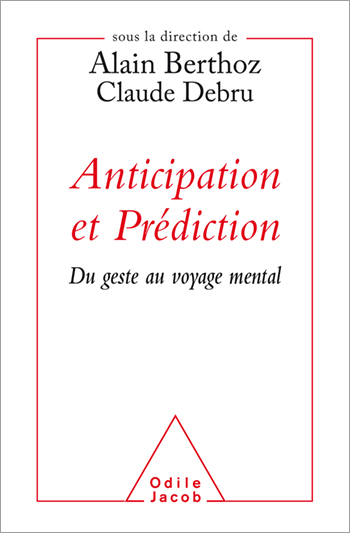
Alain Berthoz, Claude Debru
Anticipating and Predicting A Colloquium — From Thought to Mental Journey
What are the psychological and neurobiological mechanisms that enable humans to anticipate events and actions?
Vincent Trybou, Baptiste Brossard, Marianne Kedia
Self-harm Understanding and Treatment
The first book to offer a complete and pragmatic approach to the treatment of self-harm behavior
Erik Brynjolfsson, Andrew McAfee
Machine, Platform, Crowd: Harnessing Our Digital Future
How does the digital revolution enable a new integration between the human mind and machines?

Jean-Pierre Changeux
The Beauty in the Brain
"Jean-Pierre Changeux is one of those rare spirits who both challenge and unify." A text containing ideas that are entirely new. Illustrated with many original case studies from the arts and sciences.
Jacques Lesourne, Denis Randet
Research and innovation in France 2016 Futuris 2016
The tenth annual instalment in a series dedicated to research and innovation.
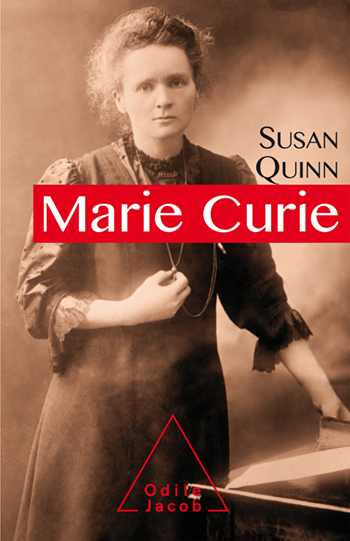
Susan Quinn
Marie Curie New édition
Going beyond the legend, this biography, entirely based on documents in the archives, brings alive the picture of a captivating woman, whose life reads like a novel. Susan Quinn is a biographist and journalist.
Jacques Lesourne, Denis Randet
Research and Innovation in France FutuRIS 2009
The present work is proposed by FutuRIS (Future, Research, Innovation, Society), a study programme on research and innovation developed within ANRT.
Vinciane Pirenne-Delforge, Lluis Quintana-Murci
Civilizations: Questioning Identity and Diversity: Autumn Colloquium of the Collège de France
The noun “civilization” entered Western European vocabulary in the Eighteenth Century, and at that time denoted a stage of material, social, and cultural evolution...

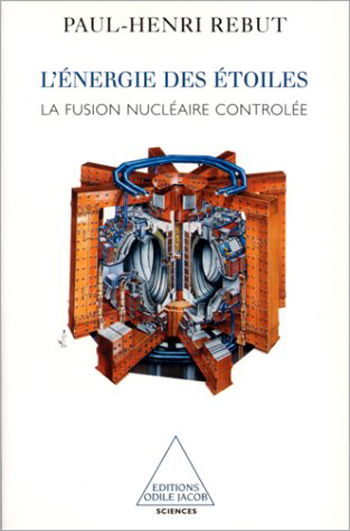
Paul-Henri Rebut
Energy of the Stars Controlled Nuclear Fusion
Nuclear fusion can be likened to God or the devil. Out there among the stars, it is godlike, creating atoms and giving birth to life. But down below, on earth, nuclear fusion is the devil: it has been used to make bombs that can annihilate everything, including all forms of life. Now that the devil of thermonuclear destruction seems to have been locked back in its box, nuclear fusion kept under tight control in civil reactors offers the hope for long-term economic development. Isnt it the only inexhaustible, non-polluting form of energy that offers no limits except that of human technical knowledge? Paul-Henri Rebut is a member of the Academy of Science.

Laurent Berrebi
Currency and Capital The New Patrimonial Economy
A very ambitious book: it proposes nothing short of a new theoretical economic model, going beyond both classic economics and the Keynesian model.


Jacques Perriault
Access to Online Knowledge
It is now possible to research and organise information and study online, through the Internet and with the help of satellites. However, the euphoric claims made for e-learning in the past, and the posturing strategies of telecommunications operators, were followed by a profound feeling of disillusion. What is the digital future ? What role can it play in education ? What measures need to be put in place in order to ensure long-lasting development ? Jacques Perriault teaches media and communications studies at the University of Paris-X-Nanterre.

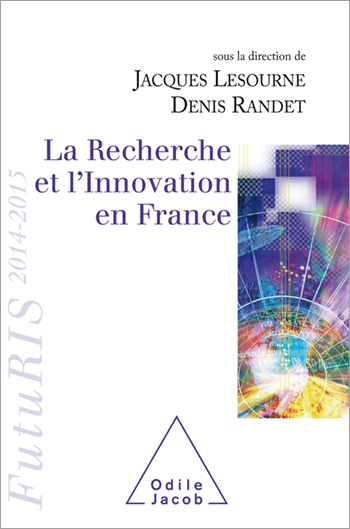
Jacques Lesourne, Denis Randet
Research and Innovation in France FutuRIS 2014-2015
The latest on research and innovation in France, described in the ninth edition of FutuRIS’s yearbook