
Catalog All books

Laurent Murawiec
The Spirit of Nations Cultures and Geopolitics
What drives the many nations that crowd onto the stage of world politics? The study of geopolitics seeks to find the force that moves them, by examining their geographical position and national interests, but it does not exhaust the subject of motives. How, for example, is their position perceived and understood? How are national interests regarded? The present investigation rests on a number of postulates, without which it would be impossible to proceed: the spirit of a nation must be real, characteristic and recognisable; it must matter; and the nations themselves must continue to matter." Laurent Murawiec

John Emsley
The Guide to Chemical Products for the Individual
Are artificial sweeteners dangerous for the body ? Can plastic packaging cause cancers by contaminating our food ? Could serious stomach complaints be caused by the nitrate contained in chemical fertilizer ? We have all heard the worrying stories about the danger posed by the numerous chemicals needed by industries to make the products which we use everyday. Does this mean there is good and bad chemistry ? The reader will find in this guide a great deal of surprising, and for the most part, reassuring information on the reality of the situation. John Emsley is a scientist at Imperial College, London. In addition to his regular radio slots, he writes for The Independent newspaper, and regularly contributes to New Scientist magazine.
William C. Dement, Christopher Vaughan
How to have a good night's sleep
For more than forty years, William Dement has been researching the subject of sleep and of sleep-related problems. According to Dement, if we dont sleep well, we cannot be healthy; but its impossible to sleep well if we dont know what disturbs our sleep patterns, or what we stand to gain from an adequate nights rest. We are careful about our diets and we make sure we get enough exercise. Yet we often forget that it is equally important to sleep well. Sleep is often sacrificed to the demands of our daily lives. Doctors still tend to minimise the physical, emotional and psychological risks that result from a failure to give sleep its due. This fundamental work by a world-renowned specialist enables us to find out how we should sleep, in order to feel better and keep healthy. William C. Dement is a world authority in the field of sleep and in the treatment of sleep disturbances. In the 1970s, he founded one of the earliest centres specialising in the study of sleep at Stanford University, in California. He continues to teach at Stanford. Christopher Vaughan is the author of How Life Begins : The Science of Life in the Womb.


Peter Piot
No Time to Lose A Life in Pursuit of Deadly Viruses
A fascinating account of the fight against viruses, by one of the discoverers of the Ebola virus

Rolf Schäppi
Woman is the Characteristic of Man From Animal Ethology to Human Nature
In this book, the author points out that although human beings are both mammals and primates, they differ in many significant ways from the other mammals and primates. Besides speech, laughter and the ability to use tools, the species Homo sapiens differs from its closest zoological cousins by three additional characteristics, which are less frequently cited because they are found only in the female. These are the female silhouette, hidden strus and the menopause. Rolf Schäppi is a psychiatrist and ethologist.


Gerald M. Edelman, Giulio Tononi
Consciousness : How Matter Becomes Imagination
How do the physical occurrences which take place in our brains create the world of conscious experience ? Philosophers have long disputed this question but today, it is science which is in a position to formulate real answers. Gerald M.Edelman and Giulio Tononi demonstrate that the processes which lead to consciousness are not confined to the brain, but are actually dependant on the functioning of numerous areas. They also show that these interactions are not fixed processes, but are constantly adjusted and modified. This research represents one step further towards understanding our identity and our complexity. Gerald M.Edelman, who has received the Nobel Prize for medicine, heads the Institute of Neurosciences at La Jolla in California. Giulio Tononi is a researcher at the Institute of Neurosciences.

Nicolas Véron, Matthieu Autret, Alfred Galichon
Crise in Financial Information Accounting and Capitalism
Enron, Andersen, Worldcom: although these companies have stopped dominating the headlines, the shock waves they sent through the business community in 2002 have not yet subsided. The belief that accounting is an exact science has been shattered, while economic relations are upset by the knowledge that financial information may be untrustworthy. Yet the market economy profoundly requires relevant and reliable information about the activity and financial situation of businesses. Taking into account the increasing strength of capital markets and international investors, the authors outline the basic elements that could constitute a new, balanced system of accounting that would accompany the necessary changes in capitalism, particularly in France and the rest of Europe. Nicolas Véron, an engineer and high-ranking civil servant, is the founder of Etudes et Conseil pour l'Information Financière (ECIF). Matthieu Autret is an expert currently working for the European Commission. Alfred Galichon is a doctoral candidate in economics at Harvard University.
Pierre Khalifa
How to be Well Treated
"The goal of this book is to answer some of the many questions that are asked about patient-doctor relations and healthcare. How should we go about choosing the doctor in whom we will entrust our health? How can we contribute to make our consultation more effective, in order to help our doctor make a better diagnosis and find the most appropriate solutions? And when should we put an end to the relationship of trust with our doctor?" Pierre Khalifa Pierre Khalifa, a specialist in internal medicine, has worked as a house doctor in Parisian hospitals and was formerly a clinical director at the Hôpital Cochin, in Paris.
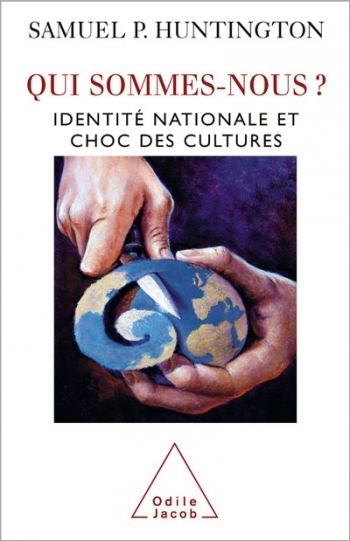
Samuel P. Huntington
Who are we ?
Huntington's latest book provides a caustic analysis of some of the fundamental issues under discussion in the U.S. today.

Janine Mossuz-Lavau
The French and Politics An Investigation of a Crisis
Are the French really discouraged and depoliticized? Janine Mossuz-Lavau decided to go into the field, to interview the people and give them a voice. What are they suffering from? What do they want? What do they believe in? These are the questions that she attempts to answer after having questioned men and women of all ages and social backgrounds, from all regions and personal affinities. Political analyst Janine Mossuz-Lavau is a Research Director at CNRS and the National Foundation of Political Science.


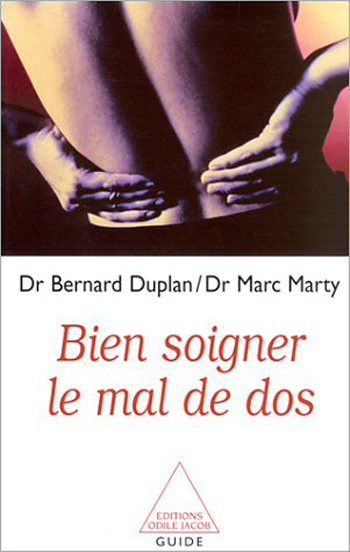
Bernard Duplan, Marc Marty
How to Treat Back Problems
Why do you have backache ? What are the treatments available to you ? Can osteopathy help ? What to do when the pain is persistant and recurring ? How can you protect your back ? What precautions need to be taken in pregnant women and children ? Does the "mental" aspect play a part in curing it ? This book is a thorough guide to current medical knowledge about the causes of backaches, how to prevent them and how to treat them. Bernard Duplan, a rheumatologist, heads a department at the rheumatology hospital in Aix-les-Bains. Marc Marty is a rheumatologist at the Hospital Henri Mondor, in Creteil.





Antoine Compagnon
The First World War, 1914-18: New Thinkers and Artists Upheavals in Science and in the Arts and Letters
The Great War: ruptures and reconfigurations in society

Michel Bar-Zohar
Shimon Peres The Secret History of Israel
“The story of Peres is that of Israel,” wrote Haaretz about this book.

Philippe Descola
Natures in Question Collège de France Autumn Colloquium
The most recent thinking on nature in the era of biotechnology and artificial intelligence