Catalog All books
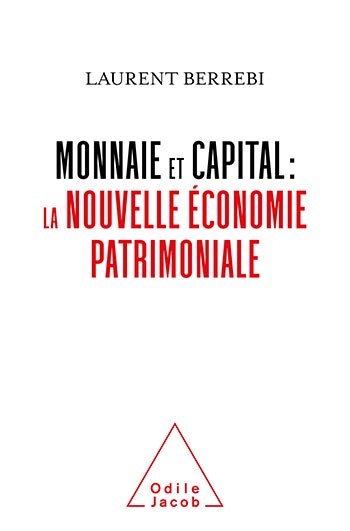
Laurent Berrebi
Currency and Capital The New Patrimonial Economy
A very ambitious book: it proposes nothing short of a new theoretical economic model, going beyond both classic economics and the Keynesian model.

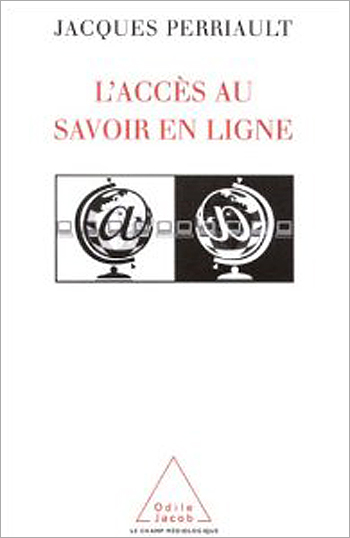
Jacques Perriault
Access to Online Knowledge
It is now possible to research and organise information and study online, through the Internet and with the help of satellites. However, the euphoric claims made for e-learning in the past, and the posturing strategies of telecommunications operators, were followed by a profound feeling of disillusion. What is the digital future ? What role can it play in education ? What measures need to be put in place in order to ensure long-lasting development ? Jacques Perriault teaches media and communications studies at the University of Paris-X-Nanterre.


Jacques Lesourne, Denis Randet
Research and Innovation in France FutuRIS 2010
A standard work for an understanding of innovation in France and of the means at its disposal...
Chris Frith
How the Brain Creates Our Mental World
“…a fascinating guided tour through the elusive interface between mind and brain written by a pioneer in the field. The author’s obvious passion for the subject shines through every page.” V. S. Ramachandran
Peter Piot
AIDS in the World
A personal account, synthesis and an impassioned plea in which science and politics converge to fight AIDS
Jeremy Popkin
Revolutionary News The Press In France, 1789-1799
The French Revolution invented a written press of a radically new type, one that was able to transmit to the French...
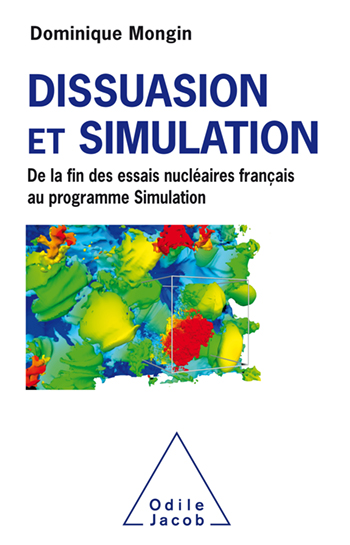
Dominique Mongin
Dissuasion and Simulation From the End of French Nuclear Testing to the Simulation Programme
the evolution of the place of nuclear defense since the end of the Cold War that is retraced here, as well as the role that dissuasion continues to play in the twenty-first century, in a world that is far from stable.
Jean-Pierre Pourtois, Huguette Desmet
At the Heart of Resilience
A reference text for mental health and education professionals, and theoretical and practical resources to help people as they recover.
Maurice Vaïsse
French Diplomacy Tools and Participants Since 1980
A complete and documented view of the Ministry of Foreign Affairs and of French diplomatic policy. A diplomatic history of the Fifth Republic, from the 1970s to the present.

Patrick Boucheron, Alain Prochiantz
Migrants, Refugees, and Exile Colloquium at the Collège de France
The timeliness of the issue of migratory movement and the displacement of populations. The multi-disciplinary nature of the studies, which bring together history and geography, geopolitics, psychology, as well as law and economics.
John Haugeland
Artificial Intelligence: The Very Idea
At once philosophical and instructive, this work offers a synthesis of a discipline that marks a revolution, both intellectual and technological, in the approach of the human spirit. John Haugeland teaches philosophy at the University of Pittsburg.

Jerry Fodor
The Mind Doesn't Work That Way The Scope and Limits of Computational Psychology
In this book, one of the most eminent figures in the field of cognition reviews his most recent views on the subject, and questions the validity of recent attempts to combine the computational theory of mind with psychological nativism and with biological principles borrowed from Darwinian evolutionary theory. Fodor goes on to examine the question that has remained unanswered for the past fifty years: is the mind a computer? This is a fascinating lesson of philosophical and scientific modesty. Jerry Fodor is a professor of philosophy at Rutgers University.
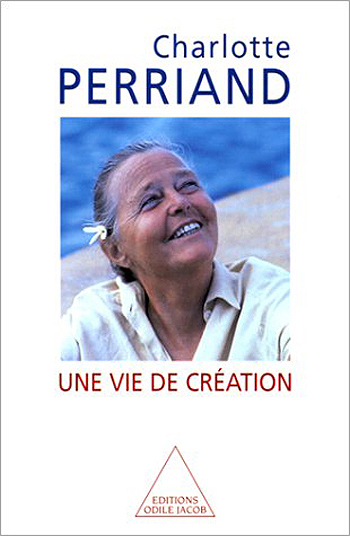
Jean-Pierre Rioux
They Taught Me the History of France
After his defence of French history, Jean-Pierre Rioux identifies his influences and his “masters”, thereby shedding light on his intellectual commitments, and painting the portrait of a generation. An ode to the greater and lesser figures of French history.
Norbert Rouland
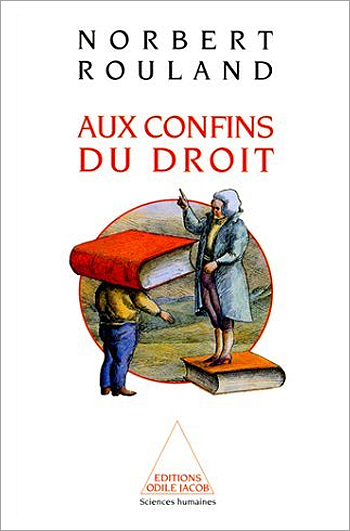
The Confines of the Law
How did law come about? How do different societies answer to the same need for justice? N. Rouland invites us to explore the many aspects of law. Through various societies, a constant question emerges: can Africans, Asians and Westerners all adhere to the same norms? Norbert Rouland is a professor at the University of Aix-Marseille-III, where he teaches judicial anthropology and the history of law.
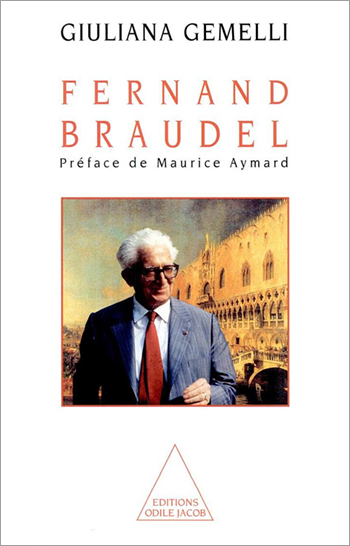
Guiliana Gemelli
Fernand Braudel
Fernand Braudel is considered as one of the major historians of the XXth century. Making his stand against factual history, he was one of the founders of the triumph of new history: the history of human societies rooted in their geographical space and obstinately determined to produce their material civilization there. This biography takes its strength from friendly conversations between Braudel and Giuliana Gemelli, who because she is Italian, had the necessary distance to make a demanding quest.
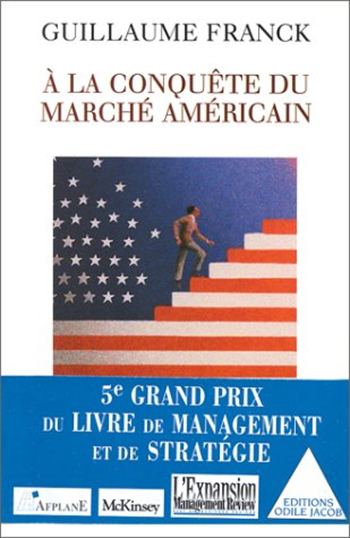
Guillaume Franck
Towards the Conquest of the American Market
After two centuries of setbacks, could France be ready to face the " American challenge " ? How can we explain that in less than ten years, fifteen large French companies will have installed themselves permanently in America ? And why have they so often chosen external growth in deciding to buy an American company and move to America ? Towards the Conquest of the American Market is a collection of case studies, valuable recommendations and anecdotes to help tomorrow's entrepreneurs succeed in their American adventure. Guillaume Franck is a consultant and professor at the School for Advanced Commercial Studies, France