Catalog All books
Michel Aglietta
Transforming the Growth System
An essential book for thinking in other ways about the relationships between finance, growth, and the climate, and for situating oneself within a long term perspective.
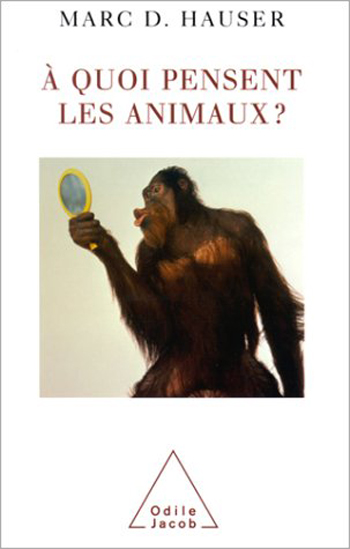
Marc D. Hauser
Wild Minds: What Animals Really Think
A slender loris comes up to a zoo keeper and hugs him. A dog lowers its head and whines when its master is unhappy. Is such behaviour a sign of affection and empathy or are other mechanisms at work, to explain the animals near-human behaviour? Why do chimps and dolphins form coalitions to defend themselves? How do lions determine, from far away, the number of gazelles calmly watering by a stream? How is it that a few species can recognise their own image in a mirror? Marc D. Hauser is a professor of psychology and neuroscience at Harvard University, where he is a fellow of the Mind, Brain and Behavior Program. Besides performing laboratory research, he has done extensive fieldwork in Kenya, Uganda and Puerto Rico.

Maurice Jacob
At the Heart of the Matter
The study of elementary particle physics and high energies, undertaken in huge laboratories such as the accelerators of Stanford, Chicago, Brookhaven, CERN at Geneva, and Dubna et Serpukhov near Moscow, is one of the most astonishing scientific feats of the last half century. The field not only allows us to understand the composition of matter and the origin and evolution of the universe, but also helps prevent these scientific instruments being used as weapons of war. The Pugwash conferences, held between scientists of the East and West, won a Nobel Prize for this very reason. Maurice Jacob, the honorary director of the division of theoretical physics at CERN, recounts in this book how these objectives have been achieved. Maurice Jacob is a theoretical physician of elementary particles.


Yves Michaud
China Today Volume 8
China is a nation at the crossroads of tradition and modernity. In this previously unpublished volume in the series "lUniversité de tous les savoirs", the authors review the present-day situation and ask the following questions: How should Chinas current political system be defined? What is Chinas position in the world today? What are the different aspects of cultural and intellectual life in China? This is a novel approach to a history of contemporary China. Contributions by Marie-Claire Bergère, Michel Bonnin, Charles Chauderlot, Anne Cheng, Yves Chevrier, Jean-Luc Domenach, Françoise Ged, François Godement, Wang Shaoqi, Joël Thoraval, Léon Vandermeersch, Chu Xiao-Quan.

Étienne-Émile Baulieu, Françoise Héritier, Henri Leridon
Contraception : Constraint or Liberty ? (Work of the Collège de France)
It is now generally accepted that contraception should be readily available.




Manès Sperber
And the Bush Became Ashes
Novelist, essayist, and philosopher Manès Sperber is a major witness of the twentieth century. Born in 1905, he became the closest disciple of Adler, a Viennese psychologist known for his rejection of psychoanalysis. Driven from Berlin by the Nazis in 1933, he definitely broke with communism during the 1937 Moscow trials and established himself in the Parisian intellectual circles of Malraux, Camus, Koestler and Aron. Recognized in German countries as a major writer, his work has received many literary prizes. By publishing his three novels in one newly translated volume, Odile Jecob proposes a reference edition of this epic.
Douglas Hofstadter, Emmanuel Sander
Analogy:Surfaces and Depths A New Theory of Mind
Could analogy, which we use unconsciously every day, lie at the core of human thought?
Anne Marcovich
What do societies dream of ?
Why do societies change? How, through countless transformations, do they manage to maintain their own identity? With the help of the many resources provided by the social sciences, history, sociology, social psychology, anthropology and economics, Anne Marcovich has tried to identify the principle of change within a framework of continuity that characterises the evolution of societies. Anne Marcovich is a researcher in the social sciences.
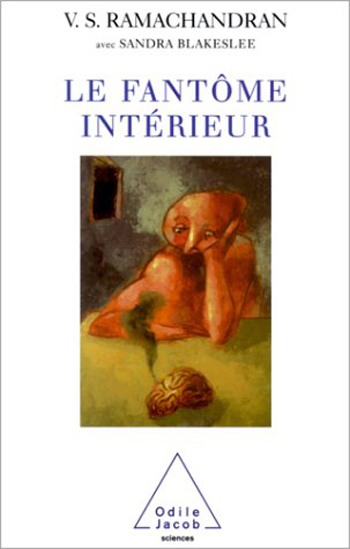
Vilayanur S. Ramachandran, Sandra Blakeslee
Phantoms in the Brain Human Nature and the Architecture of the Mind
How do we make decisions? Why do we deceive ourselves? Why do we dream? Why may we believe in God? Why do we laugh or become depressed? Few scientists have dared address these questions that inform our daily lives with so much acumen and audacity. V.S. Ramachandran is a brilliant Sherlock Holmes of neuroscience. He reveals the strangest case studies he has encountered of patients suffering from serious neurological disorders and the insights they yield about human nature and the workings of the mind. V.S. Ramachandran is professor and director of the Center for Brain and Cognition, at the University of California.
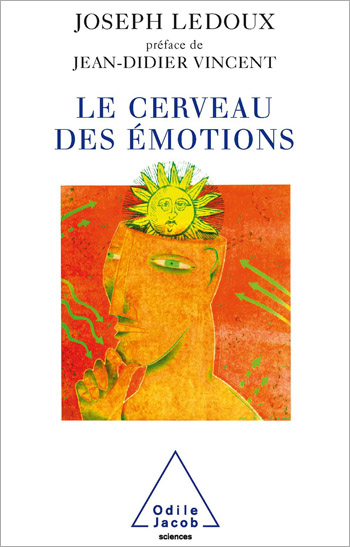
Stanislas Dehaene, Christine Petit
Words and Music Genesis of human dialogue
Speech and music shape social cognition through shared emotional states, intentions, symbols and cultures...
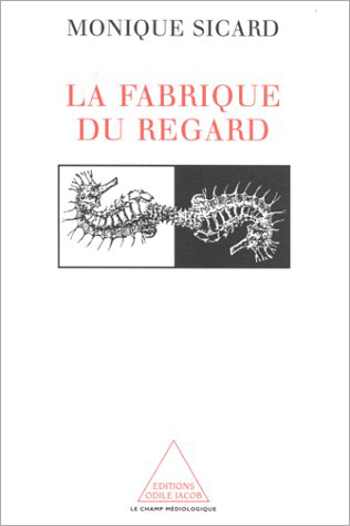
Monique Sicard
The Making of the Image
It was during the Renaissance that images and pictures were first used by anatomists, microscopists, and astronomers as scientific tools. In that era, scientific images served as a kind of inventory of the known world. In the 19th century, the popularization of scientific ideas gave science a new vigor. Photographic images gave science a new reality, explaining and legitimizing scientific concepts--movement, for example--to a fascinated public. In our days, the scientific image is often a construction--helping us to represent objects and ideas that, like fractals or black holes, cannot be defined through actual observation. Monique Sicard is Projects Director at CNRS Images Média.

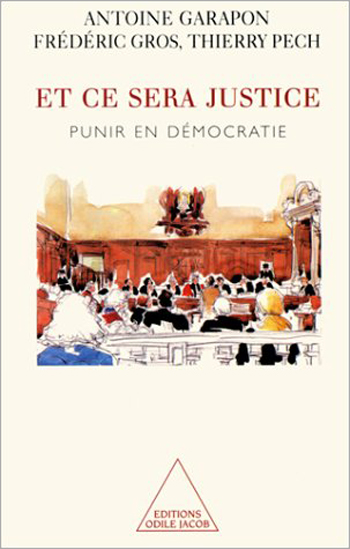
Antoine Garapon, Frédéric Gros, Thierry Pech
And this is Justice Punishment in a Democracy
What is the meaning of a sentence? This is the issue that the present book faces squarely and directly, from the philosophical, ethical and political angles. The authors goal is less to confront different viewpoints than to defend a shared belief: a just sentence is one that restores bonds. Antoine Garapon is a former juvenile judge. Frédéric Gros is a philosopher. Thierry Pech is a researcher.

Bernard Chemouny
The Guide to Homeopathy New, revised edition
This is the revised third edition of the highly successful guide to homeopathy, which was first published seven years ago. Besides bringing up to date all the facts, figures, tables, prices and addresses, the new edition has been revised to account for the following: o Lower health insurance coverage, following recent French legislation which came into effect on 1st January 2004. o The French Ministry of Health's recommendation to limit the use of antibiotics (especially for minor ailments such as sore throats). A reference work on [homeopathy], which is used by one out of three French people, Le Figaro Bernard Chemouny is a homeopathic physician and acupuncturist. He teaches homeopathy at Hôpital Saint-Jacques, in Paris.