Catalog All books

Patrick Boucheron, Alain Prochiantz
Migrants, Refugees, and Exile Colloquium at the Collège de France
The timeliness of the issue of migratory movement and the displacement of populations. The multi-disciplinary nature of the studies, which bring together history and geography, geopolitics, psychology, as well as law and economics.
Antoine Compagnon
The First World War, 1914-18: New Thinkers and Artists Upheavals in Science and in the Arts and Letters
The Great War: ruptures and reconfigurations in society

Michel Bar-Zohar
Shimon Peres The Secret History of Israel
“The story of Peres is that of Israel,” wrote Haaretz about this book.
Philippe Descola
Natures in Question Collège de France Autumn Colloquium
The most recent thinking on nature in the era of biotechnology and artificial intelligence
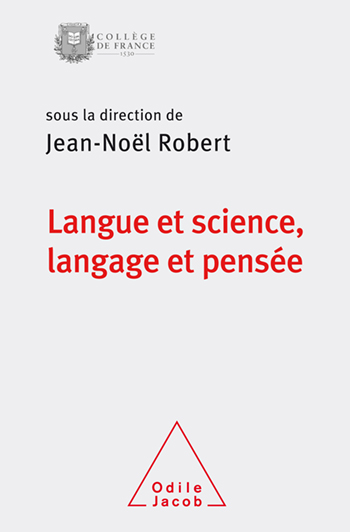
Jean-Noël Robert
Language and Science, Speech and Thought In the beginning, is it language, speech, or thought?
The fruit of the most recent autumn colloquium at the Collège de France, an interdisciplinary reflection on questions concerning the role of language and speech in the age of the internet and new technologies.
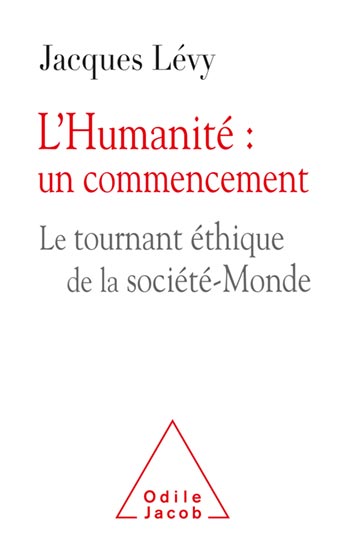
Jacques Lévy
The Ethical Turning Point and the World Society
Serious, provocative, and sardonic all at the same time, this book denounces religions of all persuasions and invites everyone to assume responsibility.
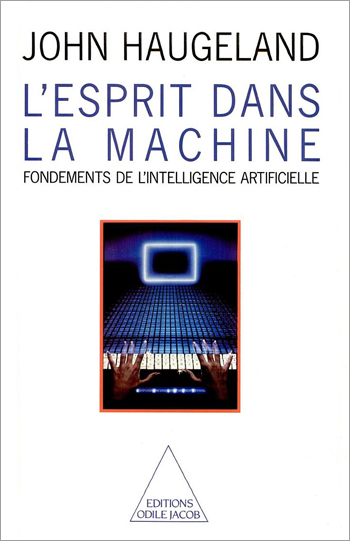
John Haugeland
Artificial Intelligence: The Very Idea
At once philosophical and instructive, this work offers a synthesis of a discipline that marks a revolution, both intellectual and technological, in the approach of the human spirit. John Haugeland teaches philosophy at the University of Pittsburg.
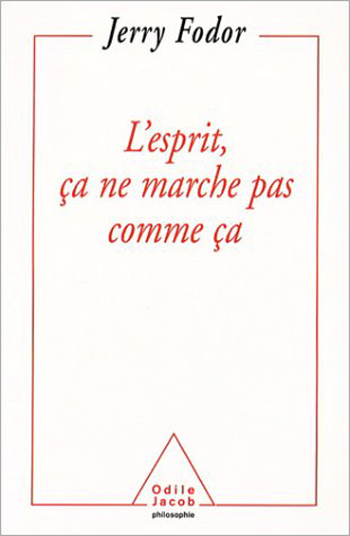
Jerry Fodor
The Mind Doesn't Work That Way The Scope and Limits of Computational Psychology
In this book, one of the most eminent figures in the field of cognition reviews his most recent views on the subject, and questions the validity of recent attempts to combine the computational theory of mind with psychological nativism and with biological principles borrowed from Darwinian evolutionary theory. Fodor goes on to examine the question that has remained unanswered for the past fifty years: is the mind a computer? This is a fascinating lesson of philosophical and scientific modesty. Jerry Fodor is a professor of philosophy at Rutgers University.
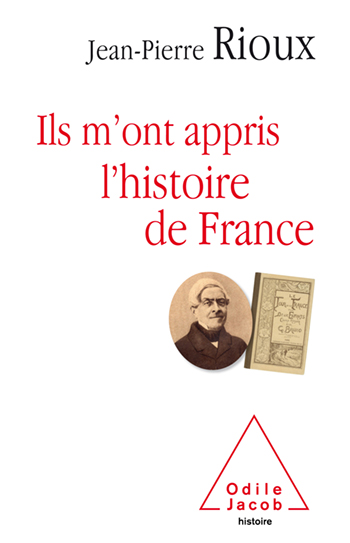
Jean-Pierre Rioux
They Taught Me the History of France
After his defence of French history, Jean-Pierre Rioux identifies his influences and his “masters”, thereby shedding light on his intellectual commitments, and painting the portrait of a generation. An ode to the greater and lesser figures of French history.