Catalog All books
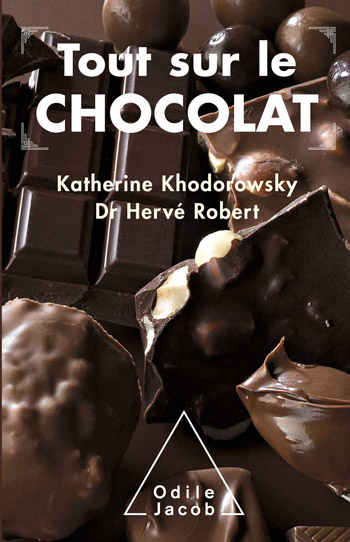
Katherine Khodorowsky, Robert Hervé
Everything About Chocolate
In this thorough guidebook, chocolate gourmets will discover chocolate in all its facets...
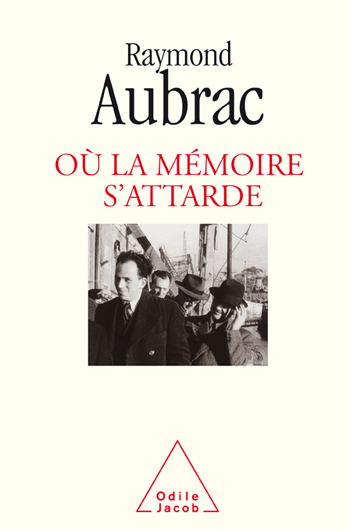
Raymond Aubrac
Where the memory lingers
Discreet by nature and secretive by necessity, Raymond Aubrac has been closely involved in more than half a century of history, in France and abroad. Within France, he is one of the great figures of the Resistance, and is one of the last survivors of the meeting at Caluire, on June 21st 1943, in the course of which Jean Moulin was arrested. A confidant of Ho Chi Minh, Raymond Aubrac also played a central role in the secret negotiations which accompanied the Vietnam war. In this book he gives a new, personal account of these events and others, including his meeting with de Gaulle, his role in the reconstruction of France, and his work at the heart of the UN.
Alain Bentolila
All about scholl
This is a brilliant, clearly argued demonstration of how the inability of the school system to evolve and develop a critical spirit may lead to the general failure of our entire society.
Observatoire des cadres
What Use Is Management? Questioning management tactics
What is management’s future role in a rapidly changing business world?
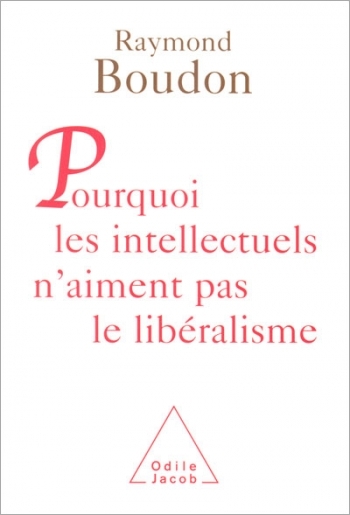
Raymond Boudon
Why intellectual peoples don't like liberalism
Given the intellectual force of liberalism, its political appeal, its economic effectiveness and its historical significance, why is it so unpopular among French intellectuals? Why does it elicit so little serious discussion? And why is it the object of so much confusion, so many clichés and misunderstandings? Is it simply out of resentment, because intellectuals feel that the market does not afford them the material and symbolic rewards that they believe they deserve? Is it just because they prefer to play a critical role in a society where capitalism is triumphant? Perhaps, but these reasons do not explain everything and they certainly dont explain the systematic rejection of liberal thought in France. A sociologist of knowledge rather than of social determinism, and a specialist in belief systems, Raymond Boudon ruthlessly analyses the cognitive mechanisms that make liberalism so hateful in the eyes of French intellectuals. The result is a keen, detailed review of the clichés that have encumbered discussions for more than thirty years. Raymond Boudon, a professor at the University of Paris-IV, is a member of the Académie des Sciences Morales et Politiques. He us the author of numerous works, most notably LInégalité des chances, La logique du social, LIdéologie ou lorigine des idées reçues, LArt de se persuader, Le Sens des valeurs and Déclin de la morale? Déclin des valeurs. He is the co-author, with R. Leroux, of Y a-t-il encore une sociologie?
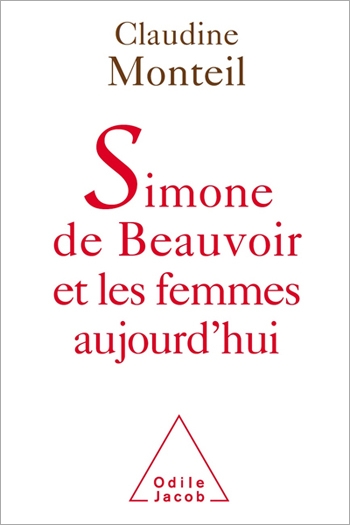
Claudine Monteil
Simone de Beauvoir Today
The author evokes her long friendship with Simone de Beauvoir and offers a detailed portrayal of women’s lives today.
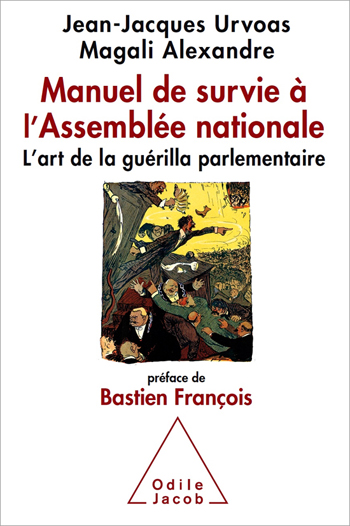
Jean-Jacques Urvoas, Magali Alexandre
Survival Handbook for the French National Assembly The Art of Parliamentary Guerrilla Warfare
In the corridors of power of the National Assembly, we encounter Jean-François Copée, Arnaud Montebourg, Bernard Accoyer, among other French politicians.
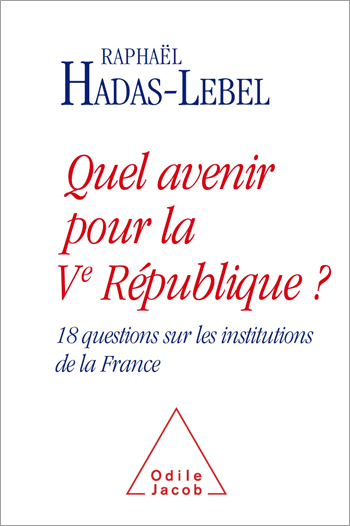
Raphaël Hadas-Lebel
The Future of France’s Fifth Republic and Its Institutions in 18 Questions
Should France abandon the five-year presidential term? Should it proscribe political cohabitation (following the failure of the presidential party to acquire a parliamentary majority)? Is a second chamber necessary? How can the Constitutional Council be made to evolve?
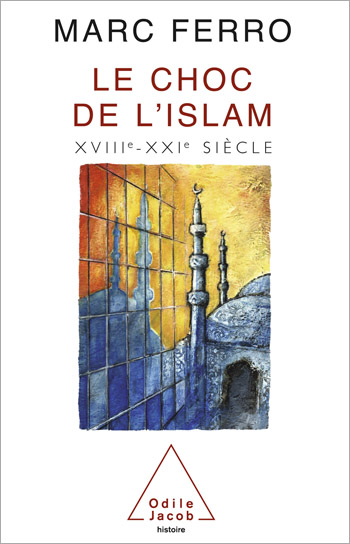
Marc Ferro
The Clash of Islam 18th to 21st Century
Faced with the expansion of the Western world over the last centuries, the Islamic world has adopted several different attitudes. Some parts of it have chosen to modernise in order to regenerate and better resist the West. Others have chosen instead to de-Islamise their societies, and to succumb to the temptation of the West in order to modernise. More recently, others have taken the opposite tack and islamised modernity, an openly aggressive choice. Marc Ferro's historical study of the great Islamic empires and their collapse examines the present situation of a divided Muslim world and a disoriented West. Marc Ferro is an honorary director of studies at the École des Hautes Études en Sciences Sociales.
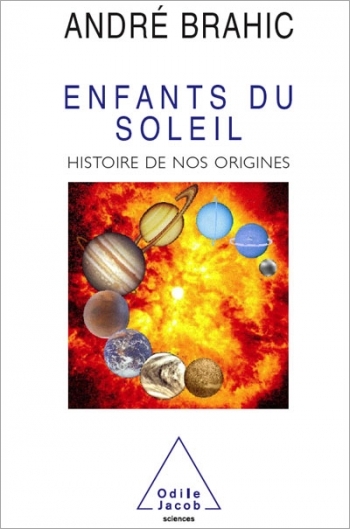
André Brahic
Children of the Sun The History of Our Origins
In less than a century, scientists have acquired enough information to try to explain the origin of life, to realise that there may be other life forms in the universe, and to begin to understand the birth of our planet and its future. André Brahic writes about the planets, the stars and the universe without forgetting the role played by human beings who are themselves made from solar atoms and are thus truly "children of the sun". André Brahic, an astronomer, is known for discovering the rings of Neptune.
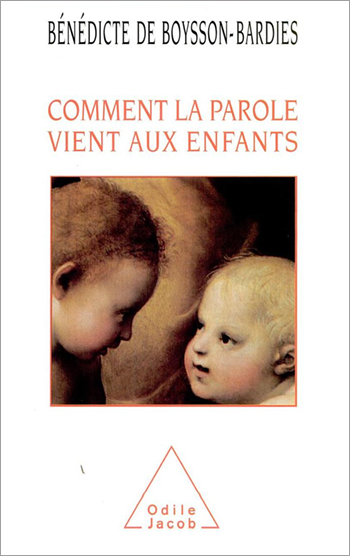
Bénédicte de Boysson-Bardies
How Does the Power of Speech Come to Children ?
How does the newborn, from his cradle, perceive the sounds that make up words? How does he hear and extract sounds, and then recognize, organize and analyze them? How does an infant come to understand and reproduce language? How does the power of speech come to children? Benedicte de Boysson Bardies invites the reader to follow the newborn from his first minute of life to his first sentence, retracing step by step the process of acquiring speech. As a psycholinguist, Benedicte de Boysson Bardies specializes in the acquisition of language by young children.
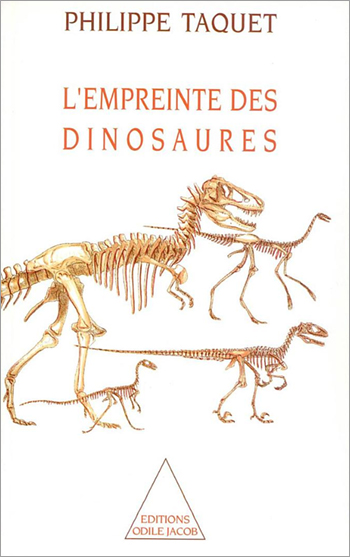
Philippe Taquet
The Imprint of Dinosaurs
"In 1964, my steps encountered the prints of dinosaurs and, ever since, my shoes have travelled extensively, from the Tenere desert to the Brazilian Sertao, from the Laos forest to the steppes of Mongolia; I was lucky to discover several dinosaurs and happy to share the life of many inhabitants of this planet, Tuaregs in Niger, Berbers from the Moroccan High-Atlas or winemakers from Corbières in France. By recounting these journeys in search of dinosaurs, I wish to draw the reader in a world that owes nothing to fiction but a lot to science." Philippe Tacquet