Catalog All books
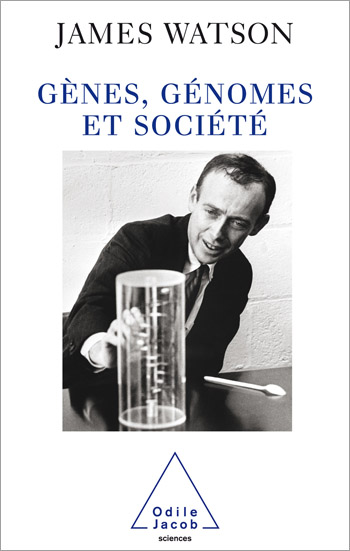
James Watson
A Passion for DNA Genes, Genomes and Society
In 1953, two young scientists, James Watson and Francis Crick, began a scientific revolution when they discovered the double helix structure of the DNA molecule, the substance that is the basis of heredity. James Watson, who won Nobel Prize in 1962 at the age of 34, has continued to play a central role in the field of genetics. Throughout his long scientific career, he has constantly sought to explain the latest developments and findings. The present volume is a collection of articles and lectures reflecting his views during the past fifty years on such subjects as GM foods, cancer, the sequencing of the human genome, and the ethical and social consequences of biology. This is a thought-provoking, often optimistic and always spirited book, reflecting the life and work of one of the great minds of the twentieth century.
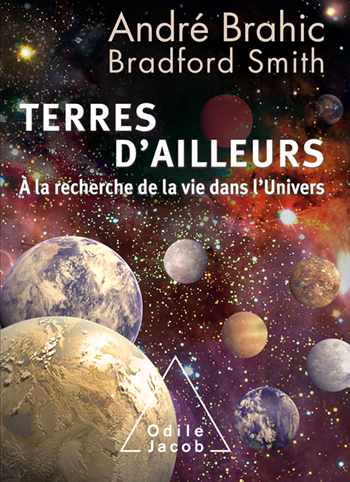
André Brahic, Bradford Smith
Exoplanets Looking for life in the Universe
A brilliant, enthusiastic and accessible work by two of the greatest living astronomers

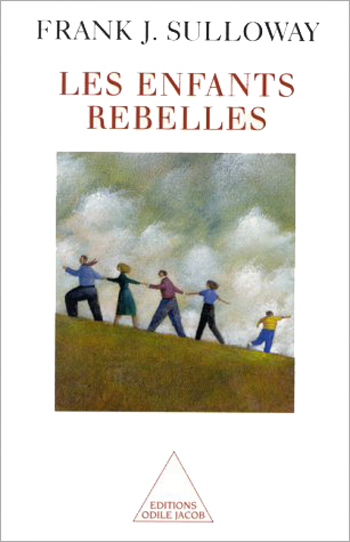
Frank L. Sulloway
Born to Rebel
The author sets out to explain why children from the same family can be as unlike one another as children from different families. Why is it that some siblings within a family accept parental authority and others rebel? What led scientific innovators such as Copernicus and Charles Darwin to reject the accepted wisdom of their time and adopt a radically new world view? In Born to Rebel, which was highly acclaimed when it was published in the United States, Frank J. Sulloway compares families to ecosystems in which siblings must find their own specific niches when competing for parental attention and favours. Frank J. Sulloway is a neuroscientist at the Massachusetts Institute of Technology.

Gérard Chaliand, Jean-Pierre Rageau
The Atlas of Diasporas
For the first time, a complete and global presentation, both historical and geographical, of diasporas. Sixty maps, many illustrations, and accurate syntheses help reproduce the great archipelago of exile, wandering and migration. From the authors of The Strategic Atlas, The Political Atlas of the 20th Century, and The Atlas of Europeans.
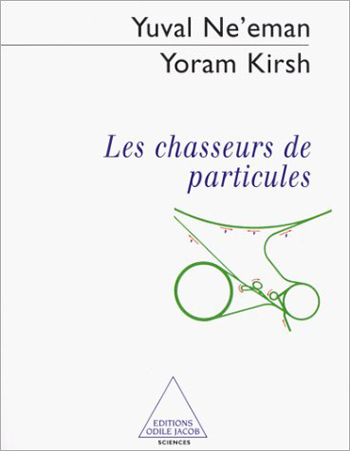
Yuval Ne'eman, Yoram Kirsh
The Particle Hunters
In this book, Yuval Neeman and Yoram Kirsh recount the story of particle physics in the twentieth century. They explain how physicists first discovered the various levels of the atom and then tried to describe its structure, culminating in the most recent "standard model". Assuming that the readers knowledge of physics is limited to basic notions such as energy, mass, and electrical charge, the authors explain the theory of relativity and the fundamental principles of quantum mechanics, which have guided physicists in their search for the ultimate particles of matter. Yuval Neeman teaches theoretical physics at the University of Tel Aviv. Yoram Kirsh teaches physics at the Open University of Israel.
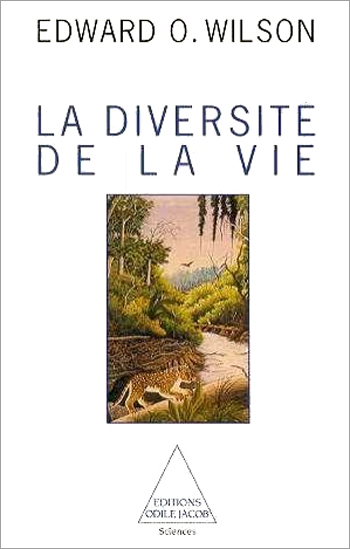
Edward O. Wilson
The Diversity of Life
What are the mechanics of evolution? What is the force behind diversity and the proliferation of the species? Why does nature never stop inventing new forms of life? What is the effect of great catastrophes on the evolution of the species? What is the real effect of human action on nature? A professor at Harvard University, Edward O. Wilson is one of the most important theoricians of biological evolution. He is also one of the most ardent lobbyists for the preservation of nature.
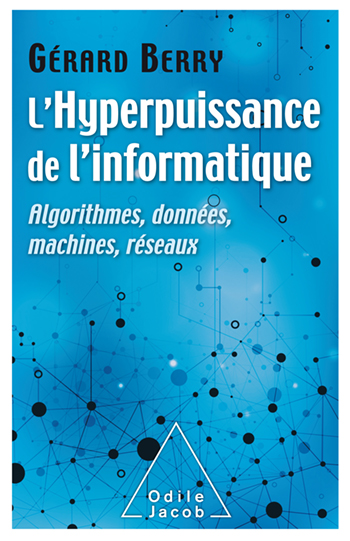
Gérard Berry
The Hyperpower of Computer Science
An attractive (color illustrations) and very instructive book for which Gérard Berry has made use of his experience as a lecturer and a teacher of children 9-12 years-old at a Montessori school. A book that fills a gap in knowledge: quite simply, it helps to understand and better anticipate the great changes that are occurring right before our eyes.
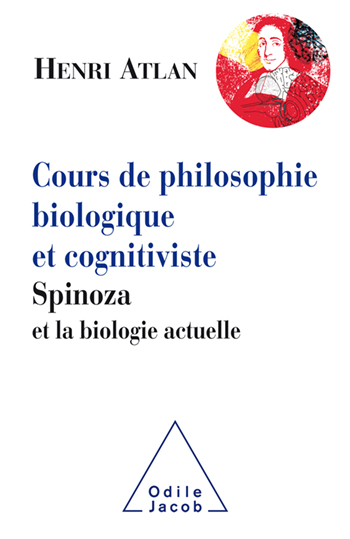
Henri Atlan
Lectures in Biological and Cognitivist Philosophy Spinozist Configurations
An introduction to both one of the greatest philosophies in history, and to the most current issues in the neurosciences. A new way of thinking about the relationships between the brain and the mind.
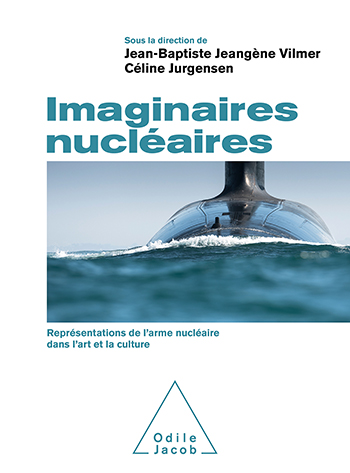
Jean-Baptiste Jeangène Vilmer, Céline Jurgensen
Nuclear Imaginaries
A cross-sectional approach: from the curious to the specialist, all audiences will find food for thought here. From fiction (cartoons, cinema…) to the military perspective, and including literary references, a great variety of subjects are broached.
Edmund Phelps
Mass Prosperity
A profound reflection, at the meeting-point of economics and psychology, on the forces of innovation and economic well-being and the motivations of both. A view of innovation that confronts many accepted ideas — the Schumpeterian view of the entrepreneur, the development of science as a source of innovation, and so on — and which needs to be debated.
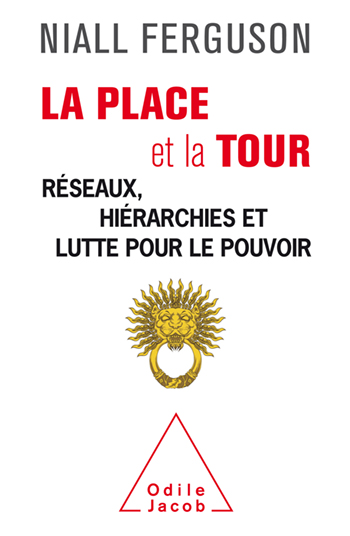
Niall Ferguson
The Square and the Tower Networks, Hierarchies and the Struggle for Global Power
Most history is about the people at the top of the towers of power. But what if the real action is in the social networks down below, in the town squares ? Niall Ferguson brilliantly recasts past and present as an unending contest between hierarchies and networks.
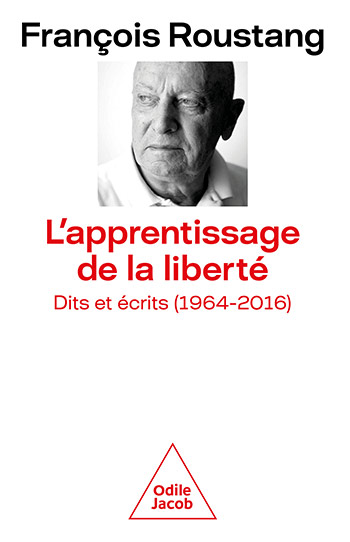
François Roustang
Learning to Be Free Spoken and Written Words (1964-2016)
The first complete volume that traces the famous therapist’s career path and embraces his entire intellectual legacy, which is a source of new and fruitful perspectives in psychotherapy.

Colonel Passy
Colonel Passy Memoirs of the Chief of the Secret Services of a Liberated France
These two volumes constitute a new edition of Colonel Passys memoirs, which were first published by Plon in a three-volune limited edition (Deuxième Bureau-Londres; 10 Duke Street-Londres; Missions Secrètes en France). The new edition has been presented and annotated by historian Jean-Louis Crémieux-Brilhac, a specialist in the period. André Dewawrin, alias Colonel Passy, headed the Bureau de Contre-espionnage, de Renseignement et dAction (BCRA) of the Free French in London, from 1940 to 1944. He became General Koenigs chief of staff, in 1944. A former student at the prestigious Ecole Polytechnique, he headed the department of research and study for the French Ministry of Defence after the war.
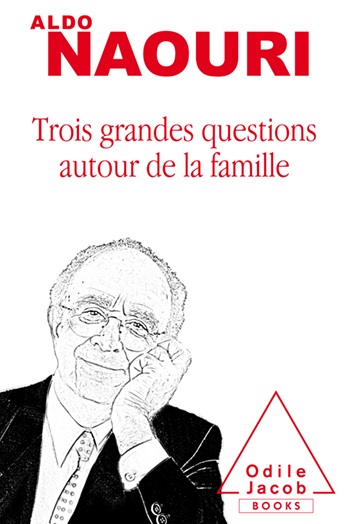
Aldo Naouri
Three Questions On The Family
Aldo Naouri’s complete reference work! The fruit of all his experience related to the fragile and essential parent-child relationship
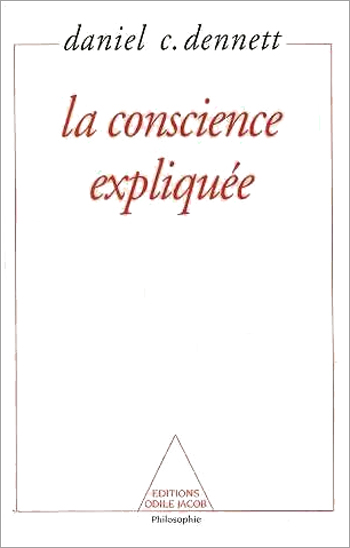
Daniel C. Dennett
Consciousness Explained
What is it that transforms a small piece of matter into an animated being? What is it that gives to certain physical structures the enigmatic privilege of feeling sensations and having experiences? Conscience. But what do we know about conscience? Daniel C. Dennet proposes a new explicative model founded on the modern revelations of psychology, neurology, and artificial intelligence. Daniel C. Dennett directs the Center for Cognitive Studies at Tufts University. He is one of the leaders in the philosophy of the spirit in the United States.
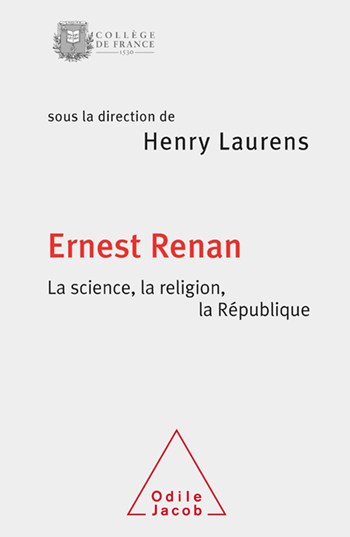
Henry Laurens
Ernest Renan, Science, Religion and the French Republic
A tribute to the great nineteenth-century French scholar Ernest Renan, with contributions by experts from diverse fields
Philippe Conticini, Jacques Fricker
Eat Desserts Freely Pleasure Without Weight Gain
Highly unusual, delicious desserts, created by one of the most creative pastrycooks at work today. Easy-to-make desserts that open the way to creative improvisation. Light recipes: believe it or not, it is possible to eat marvellous desserts made with real sugar and butter without gaining weight. Jacques Fricker explains how you can stay in shape and eat your favourite desserts without losing your figure or your health. Philippe Conticini works for the Petrossian restaurants in Paris and New York. Jacques Fricker is a nutritionist at the Hôpital Bichat, in Paris.
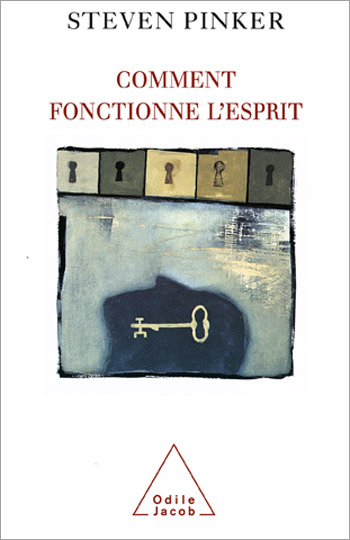
Steven Pinker
How the Mind Works
In his new book, Steven Pinker studies the human mind. What is it? How did it evolve? How does it enable us to see, think, feel, laugh, interact with others, have aesthetic experiences, and reflect on our own lives? This is the long-awaited synthesis encompassing all the major explanations offered by evolutionary biology and the cognitive sciences concerning mental life of human beings. Steven Pinker heads the Center of Cognitive Neurosciences at the Massachusetts Institute of Technology. He is the author of the highly acclaimed Language Instinct.