
Catalog All books


Jean-Didier Vincent
Casanova The Diseases of Pleasure
J.-D. Vincent, author of The Biology of Passions, now turns his energetic eye upon the famous Venitian adventurer of the 18th century, whose Memoirs are strangely peppered with glorious descriptions of his diseases: no less than eleven small poxes for a multitude of conquests...

Lucy Vincent
How to Fall in Love
What if love was one of the best magic tricks invented by evolution ? A far cry from the soppy, and rose-tinted fairy tales of our childhood, Lucy Vincent invites us to discover, with her both humorous and emotive approach, the true face of love its ruses, its calculations, but also its charm, its fun, and at the end of the day, its essential beauty. An indispensable read for those who wish to know the hidden aspects of love, and a useful tool to help master the strategies and language of love. A doctor in neurosciences, Lucy Vincent is equally a scientific editor at Radio France.
Lucy Vincent
Make Your Brain Dance
Fatigue, bad mood, stress, eating disorder, sleep problems… : a scientifically-based explanation of the effects of dance to improve your everyday life.
Jean-Didier Vincent
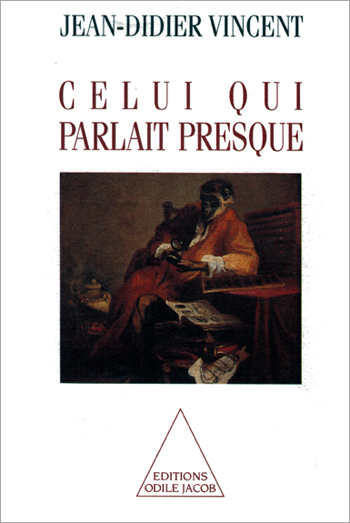
Celui qui parlait presque
When a rich English woman, a grouchy scientist, a bonobo monkey and a young man interested in religion meet together in a castle of Provence, what do they do? They talk. And what do they talk about? About the origins of life, the appearance of language, about the secrets of memory, or about the emergence of desire. Subtle and witty, J.-D. Vincent, a neurobiologist, author of The Biology of Passions, offers us here a defense and an illustration of material reason.
Jean-François Peyret, Jean-Didier Vincent
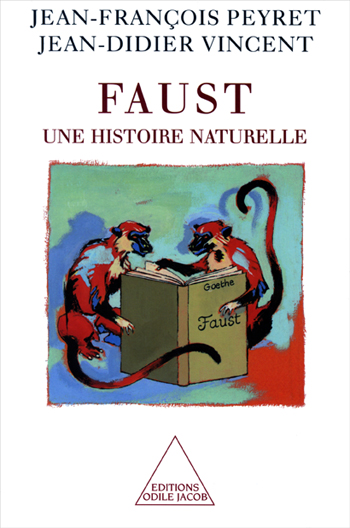
Faust A Natural History
It all began in July 1995, when theatre director Jean-François Peyret met with biologist Jean-Didier Vincent, in the latters lab. The intellectual exchange and friendship that developed from that meeting resulted, several years later, in a theatrical production based on a free adaptation of Goethes Faust, until then deemed unperformable. In this book, they look back on their production of Faust, and take stock of their experience. Their book can be regarded as a novel, a dialogue, a confession, a reinterpretation of Faust, or simply a mind game. Quietly and without ostentation, Peyret offers the reader a brilliant examination of the theatre today, and Vincent upholds his views more freely and strongly than ever before.

Jean-Didier Vincent, Pierre-Marie Lledo
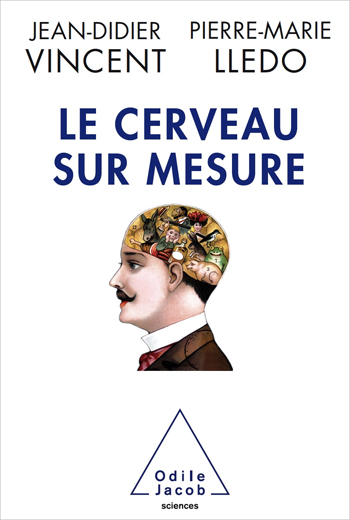
The Made-to-Order Brain
The neurosciences are making it possible to repair, modify and enhance the brain, heralding a revolution for all of us

Lucy Vincent
How Do you Feel? 15 sensational exercises to reprogram your brain
The way we move and our intellectual, cognitive and emotional development are closely linked. It’s time to get back to the body.

Denis Vincent
Asthma
"This little book will help demystify an illness that can be highly stressful; it should also encourage an easier form of dialogue with the patient's doctor." Impact Médecin