Catalog All books
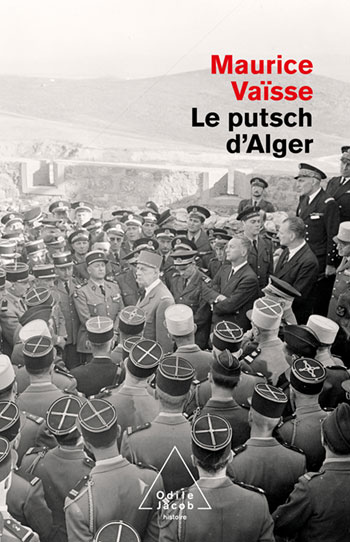
Maurice Vaïsse
The Algiers Putsch
Using archives and unpublished accounts, the spellbinding tale of a little-known turning point in contemporary history
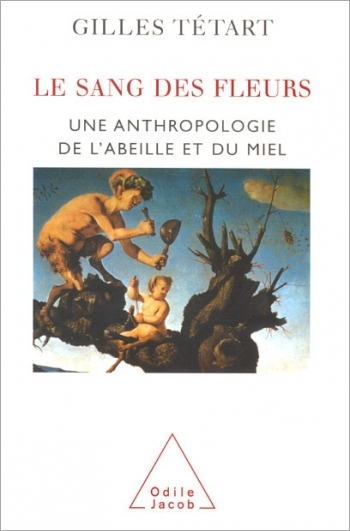
Gilles Tétart
The Blood of Poets
The first and constant motive of my scientific life has always been the blood, and its formation, diseases and mutations. During the day, I studied corpuscles and serums. In the evening I read or reread poetry. Sometimes I came across blood once again. An intuition, an allusion of a poet came to clarify my clinical or biological reflections of the next day. These kind of exchanges have inspired this book, which constitutes a personal anthology. It is the same blood which runs in the veins of Iphigenis before the planned sacrifice, as wriggles under our gaze using the microscope, and as draws our eyes to the lips it colours The present anthology bears witness to this unity and this diversity of the blood. Jean Bernard Jean Bernard is a member of the Acadamié française
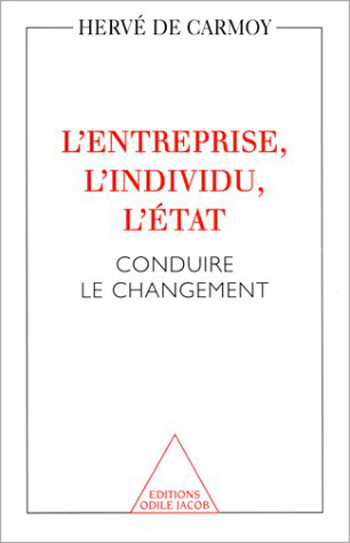
Hervé de Carmoy
Entreprise, Individual and State Leading to Change
The author believes that France is suffering from numerous ills, including inertia, demagogy, unemployment, corruption, corporotism, elitism, and a general withdrawal from the outside world. He also thinks that much more than clear-headedness and a desire for change are required if a cure is to be found. What is the best way of making the necessary changes? How have others gone about implementing those changes? He believes the business world provides an excellent model for learning how to deal with an ever-changing environment. Hervé de Carmoy was formerly general director of the Midland Bank in London.
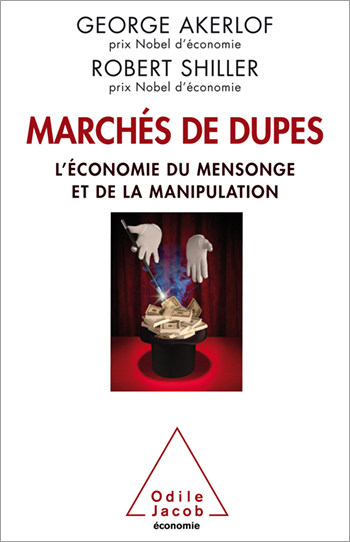
George Akerlof, Robert Shiller
Phishing for Phools The Economics of Manipulation and Deception
Deception lies at the heart of the economy
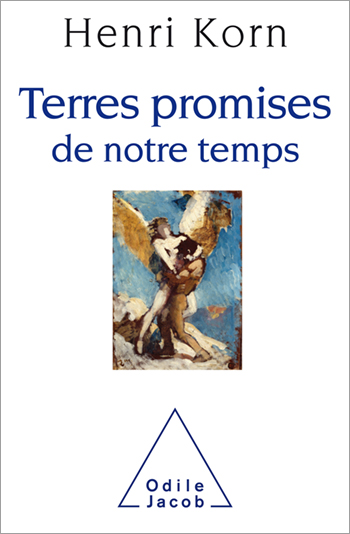
Henri Korn
Promised Lands
From a childhood under the Nazi occupation to great scientific discoveries: a life of passionate curiosity in which nothing is predetermined
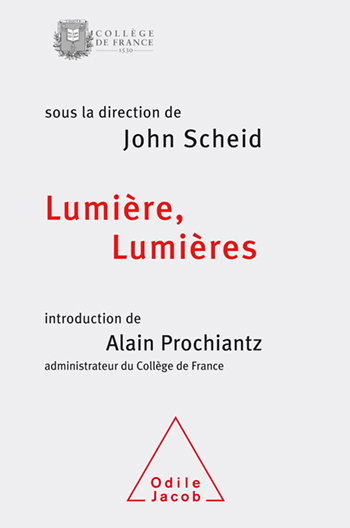
John Scheid, Alain Prochiantz
Lights, light
The 2015 Colloquium of the Collège de France unites some of the most eminent authors in physics and astrophysics, in biology, in neuroscience and the history of science. Light is a timeless subject: it has always had the power to fascinate and disturb. Here it is explained.
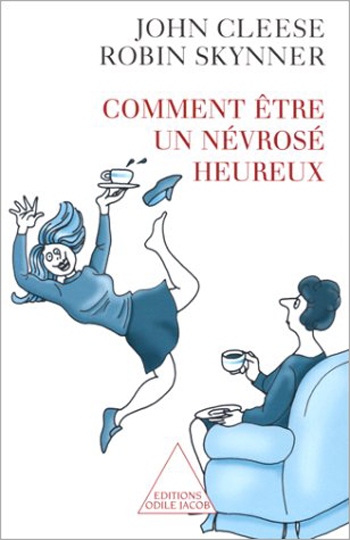
John Cleese, Robin Skynner
Life and How to Survive It
In Life and How to Survive It, the authors have given us more than 400 pages of lively, tonic humour. Their subject is the joy of living and the conditions required to enjoy life to the full. Proceeding by ever-larger concentric circles, the authors successively discuss happy families (brilliant!), companies that allow their employees to fulfil themselves, and finally countries where life is pleasurable. This is British humour at its best, brilliantlyand hilariouslyillustrated. British comic actor John Cleese is famous for the cult television series Fawlty Towers, which he co-authored and starred in. Robin Skynner is a psychotherapist specialising in group therapies.

Christian Stoffaës
Ends of Worlds
An economic pulse sustains life in the modern world. C. Stoffaës investigates the highs of economic boom and the lows of paralyzing depression. He presents an historical survey of our dominant technological and mental structures from Keynes to Schumpeter, from the steam engine to the microchip, from the American golden age to the new Pacific prosperity.
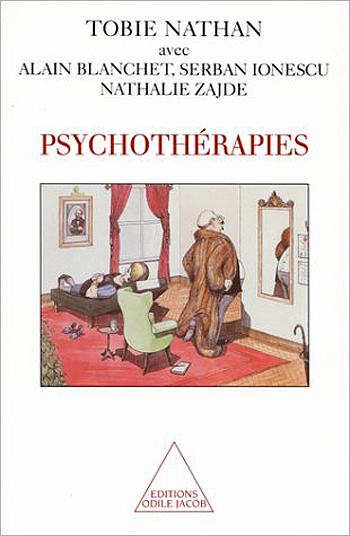
Tobie Nathan, Alain Blanchet, Serban Ionescu, Nathalie Zajde
Psychotherapies
This book is a rigorous presentation of what is now called the Nathan method, that is to say the therapeutic methods (using objects or discussion) which result in a cure through that influence. Using the differences between Western and African techniques as a starting point, he explains how following a psychotherapeutic treatment, or consulting an African healer constitutes an affiliation to a certain group. That is not to say, however, that all therapeutic methods are the same. On the contrary, this book tries to define some kind of criteria of evaluation which is conducive to an informed choice. The two main elements of psychotherapy, the therapy and the trauma, in other words the object and the motivation of the sick person for taking the step of getting treatment, are re-examined in this new context.
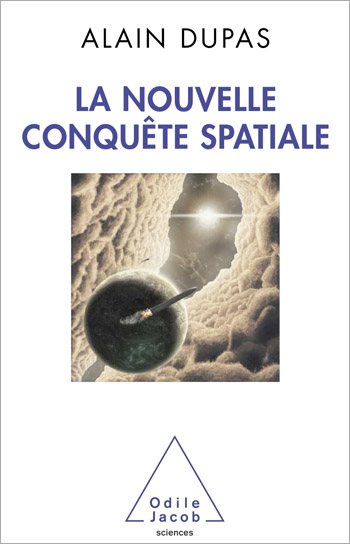
Alain Dupas
The New Spatial Conquest
The desire to explore our solar system, with robots and especially with men and women, has become a global one. A new page in the lengthy history of relations between humans and the cosmos is already being written.
Denis Knoepfler
Narcissus and the Greek City
In this remarkable, erudite and beautifully written investigation, a renowned expert in Ancient Greek history sets out to uncover the true historic origins of a familiar figure from Greek mythology — Narcissus.
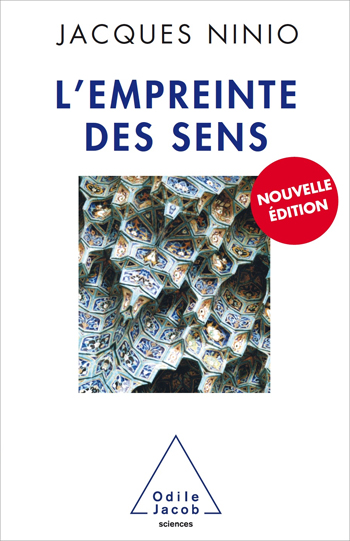
Jacques Ninio
The Print of the Senses
What is perception? What is the world around us really like? These are the questions that Jacques Ninio examines here, in this completely revised new edition of his highly successful work.
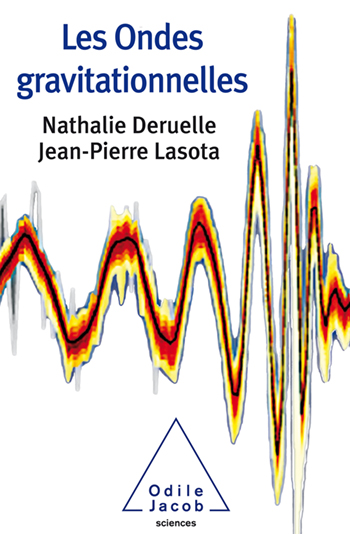
Nathalie Deruelle, Jean-Pierre Lasota
Gravitational Waves
An extraordinary, theoretical, and experimental saga told by two of the protagonists, or how a purely theoretical notion became a physical reality. A revolution: telescopes now observe in gravitational waves also! Astronomy of the future will be gravitational.
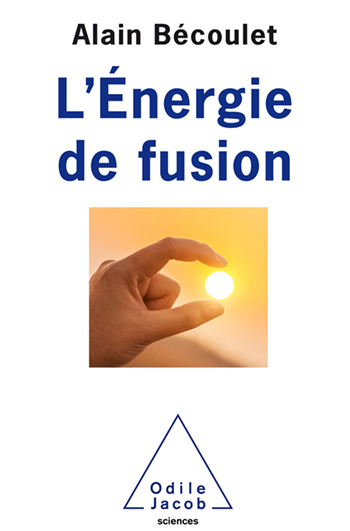
Alain Bécoulet
Nuclear Fusion
The great hope in the realm of energy transition: fusion produces almost no radioactive waste, and doesn’t emit CO2. . .
Antonio R. Damasio
Descartes' Error Emotion, Reason, and the Human Brain
Being rational is not denying oneself emotions. The brain which thinks, calculates, and makes decisions is not a different entity to the one which laughs, cries, loves, and experiences pleasure and annoyance. The heart has reasons that reason itself is far from being ignorant of. In opposition to the old Cartesian dualism and to all those who wish to reduce the functioning of the human mind to detached calculations worthy of a supercomputer stands the results of the latest neurological research : the absence of emotions and sentiments prevents us from being really rational. Antonio R. Damasio heads the department of neurology at the University of Iowa, in the United States, and teaches at the Institute of Biological Studies of La Jolla.
Uta Frith
Autism: Explaining the Enigma
Why do certain children live walled in by silence, cut off from the world and others? For the first time, this book offers a general theory on autism, a profound disorder in cognitive development rather than one resulting from family conflict or an attention deficit. Uta Frith is a psychologist and member of a cognitive development study group at the Medical Research Council of Cambridge.