Catalog All books
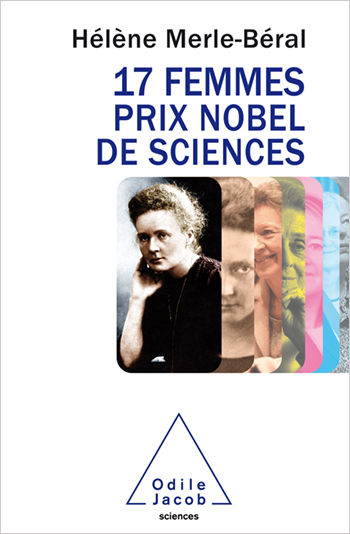
Hélène Merle-Béral
17 Women Who Won a Nobel Prize for Science
This book spotlights the often surprising stories of these women who have achieved excellence and eminence in a still male-dominated environment

Alain Bauer, Marie-Christine Dupuis-Danon
The Protectors An Inside History of the French Gendarmerie
Following Les Guetteurs [the Lookouts], the first history of French Intelligence as told by its heads, here is Les Protecteurs, the inside history of the National Gendarmerie.
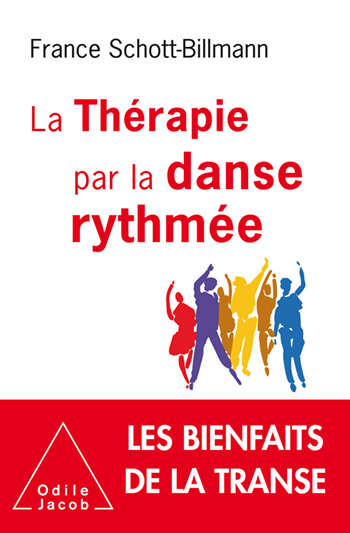
France Schott-Billmann
Therapy through Rhythmic Dance Healing through dance
Dance: an inner movement that can liberate any person who allows him or herself to be carried away by music.
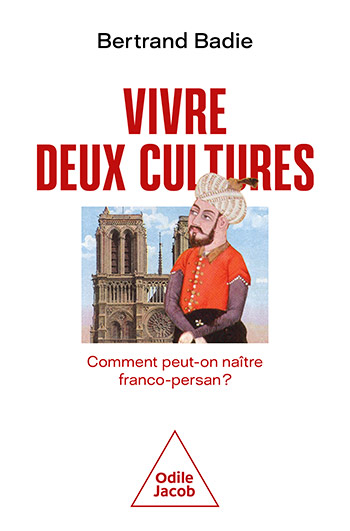
Bertrand Badie
Between Two Cultures
A subtle and sensitive account of a private part of Bertrand Badie’s life, which sheds new light on his interest in world affairs.
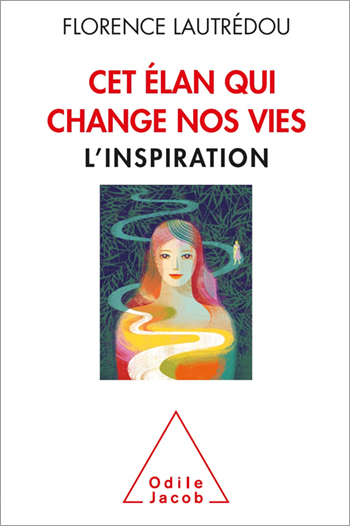
Florence Lautrédou
This Pulse is changing our lives Inspiration
A stimulating book to help us welcome the gift of inspiration, and then take charge of our lives
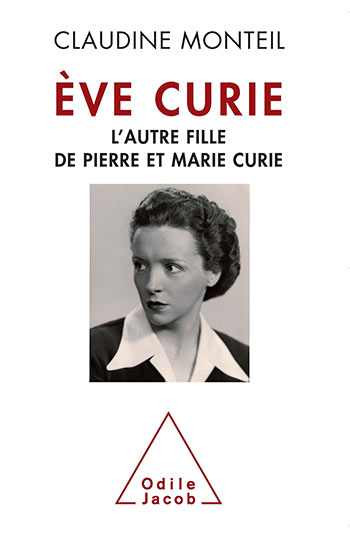
Claudine Monteil
Ève Curie Pierre and Marie Curie's another daughter
The daughter of Pierre and Marie Curie, Ève Curie was a writer, journalist, concert pianist and wartime activist
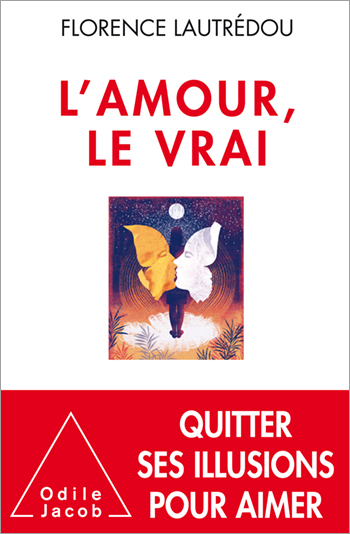
Florence Lautrédou
True Love Breaking Free from the Illusions of Love
Written in vibrant and literary style, but at the same time a real guide to personal development which will help guide the way along the path of love. Finding real love remains a major hope for many women.
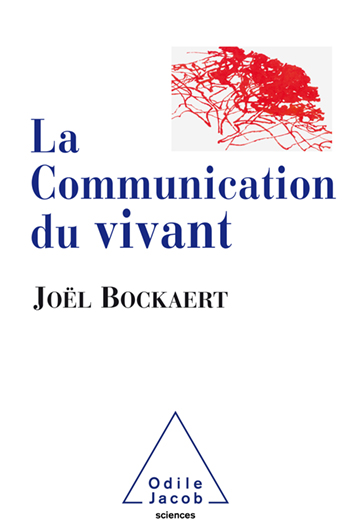
Joël Bockaert
The Communication of living things
A unique theme, communication, which encompasses all the kingdoms of life: a great opportunity to see them in a different light. If living is about communication, how is hyper-communication shaping the human being of tomorrow?
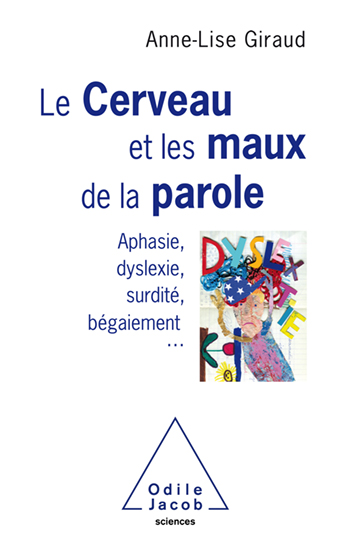
Anne-Lise Giraud
The Brain and Speaking Disorders Aphasia, Dyslexia, Deafness, Stuttering
Both clear and detailed, a book that provides correct answers to the questions that are asked about speech and the pathologies related to it.

Alexandre Stern
Monkeys in the Kitchen How Cooking Made Us Human
How the invention of culinary and agricultural practices, the discovery and exchange of products, through the millennia have contributed to civilizing the human being.
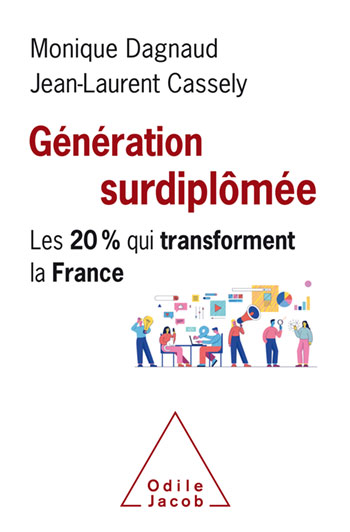
Monique Dagnaud, Jean-Laurent Cassely
The Overeducated Generation The 20% Who Are Transforming France
The reconfigurations around education probably offer the most relevant angle of observation for understanding contemporary societies, and to decipher the popular resentment against the world of the educated elite.
Hélène Romano
Bad Mothers Motherhood for Better or Worse
Confronting the disturbing issue of abuse by mothers can help us to better comprehend and heal the wounds associated with the mother-child relationship
Bernard Sablonnière
The Mysteries of the Human Body
Do your organs interest you? In this new book, Professor Sablonnière offers a guided tour of them, a new Fantastic Voyage that plunges us into the mysteries of the body and its arcana.
Élie Cohen
Industrial Sovereignty
How can we escape our economic dependency and regain our industrial sovereignty? What substance should be given to this “strategic autonomy” that the French and the Germans henceforth hope will be achieved?
Françoise Salomon
Silent Child The Story of a Schizophrenic
This largely autobiographical book recounts the story of a family brutally shaken their sons violence and mental illnessthough nothing had previously seemed to distinguish him from other teenagers. It is a highly moving chronicle of the world of schizophrenia which remains little known by the general public. The mother of a schizophrenic child, Françoise Salomon is an active member of the French Union nationale des amis et des familles des malades mentaux.

Ilya Prigogine
The End of Certainties
As we come to the end of the century, the question of the future of science is often posed. I believe we are just at the beginning of a new endeavour. We are witnessing the development of a science which is no longer limited to simplified, idealised situations, but makes us face the complexity of the real world. This new science will allow human creativity to be experienced as the unique expression of a fundamental trait common to all aspects of nature. Ive tried to present this conceptual transformation, which implies the beginning of a new chapter in the fruitful relations between physics and mathematics, in a manner that will be comprehensible and accessible to all readers interested in the evolution of our ideas of nature. We are but at the threshold of a new chapter in the history of our dialogue with nature, writes Ilya Prigogine. Ilya Prigogine, winner of the Nobel Prize for Chemistry, teaches at the Free University of Brussels and at the University of Texas, in Austin.
Henry de Lumley, Marie-Antoinette de Lumley
The Memoirs of Two Prehistorians
The epic story of Humankind, recounted by eminent prehistorians
Philippe Aghion, Gilbert Cette, Élie Cohen
Manifesto for a New Economic Policy
A vital social and economic programme

Jean-Pierre Rioux
A Short History of France
Who are the French and what are their goals? A French historian provides the answer as he revisits his country’s history.
Jean-François Amadieu
The Looks Society Beautiful, Young People...and Others
An original thesis on breaking the silence surrounding the importance of appearance, and one that nobody — employer, employee, consumers — wishes to explicitly confront.

Claude Lelièvre
School Today in the Light of History
A light-hearted and fascinating review of all that we thought we knew about School
Patrick Guyomard
The Tendency for Polymorphe Perverse Behaviour
It is the child that Freud predominantly identifies as polymorphe perverse in his Three Essays on Sexual Theory, but he recognised that it is in fact a universally human and original trait. Certainly, clinical experience suggests that this characteristic is not solely reserved for children. It is evident in each psychoanalytical treatment as common to all mankind. It is also found in science and in politics. If the tendency for polymorphe perverse behaviour is a universally human trait, everyone who has human thought patterns is affected. It is for this reason that this book gathers together reflections from psychoanalysts, clinicians specialising in both adults and children, scientists, anthropologists, and historians in order to revaluate the perversion and give a new perspective on the controversies it can trigger. Organised by the Freudian Psychoanalyst Society.
Gerald M. Edelman
Wider than the Sky
The brain is wider than the sky, For, put them side by side, The one the other will include With ease and you beside, wrote the American poet Emily Dickinson in the mid-nineteenth century. The fundamental mechanisms governing mental life are now the subject of scientific study. In this book, Gerald Edelman examines a major aspect of the mind - consciousness. How can the firing of neurons give rise to subjective sensations, thoughts and emotions? How can the disparate domains of mind and body be reconciled? A scientific explanation of consciousness must take into account the causal connections between these two domains. Such a theory must show how the neural bases of consciousness appeared during the evolutionary process and how certain animals developed consciousness. These are some of the key issues that Gerald Edelman examines here. He shows that consciousness cannot be located in a specific area of the brain, because it is a process linked to how the brain functions as a whole, to its wealth of connections and to its great complexity. The brain, he argues, is not a kind of computer. Edelman is regarded as one of the greatest theoreticians of the brain, and his notion of consciousness dominates all discussions on the subject among the international scientific community. This book offers the most accessible version of his theories that is available today. The winner of the 1972 Nobel Prize in Medicine, Gerald Edelman heads the Institute for Neurosciences, in La Jolla, California.
Didier Pleux
Handbook of Education for Modern Parents
Parents often feel overwhelmed by their children's omnipotence. It is easy enough to say that parents must recover their authority and lay down rules, but what are the practical ways of going about this in everyday life?
Thierry Najman
Places of Asylum Should We Open Psychiatric Wards?
Locking up psychiatric patients is shameful and ineffective