Catalog All books
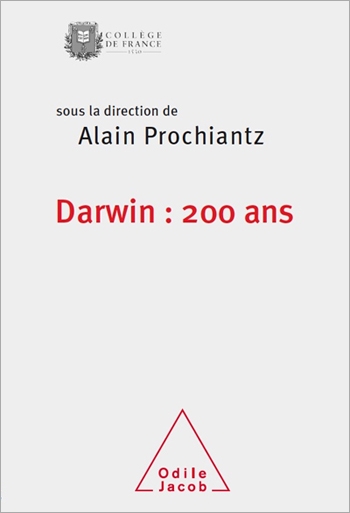
Alain Prochiantz
Darwin: 200 Years
More than an homage to a great scientist, this book, written by eminent specialists, is a perfect introduction to understanding the impact of Darwinism on contemporary thinking and science
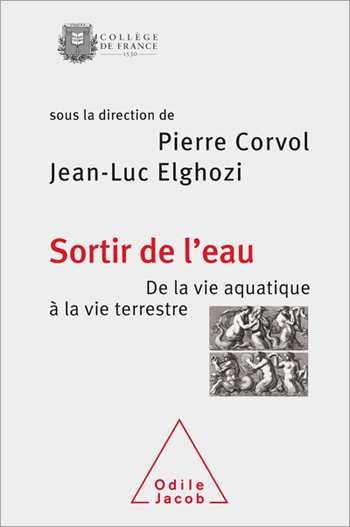
Pierre Corvol, Jean-Luc Elghozi
Coming Out of the Water From Aquatic Life to Land Life
An in-depth study of a crucial evolutionary phase, written by eminent specialists
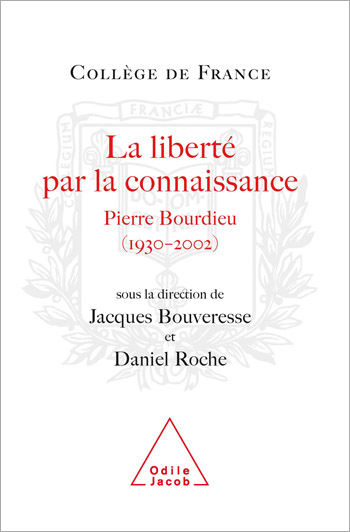
Jacques Bouveresse, Daniel Roche
Freedom Through Knowledge: Pierre Bourdieu, 1930-2002 (Travaux du Collège de France)
Gathered in this volume are the texts of lectures given in memory of Pierre Bourdieu at an international colloquium held on 26-27 June 2003 and jointly organised by the Collège de France and the Ecole Normale Supérieure, with the backing of the Hugot Foundation.
Bernard Poulain, Etienne Hirsch
Frontiers in the Neurosciences
Along with Étienne Hirsch and Bernard Poulain, thirty prestigious contributors present an assessment of what the neurosciences will be in twenty years.

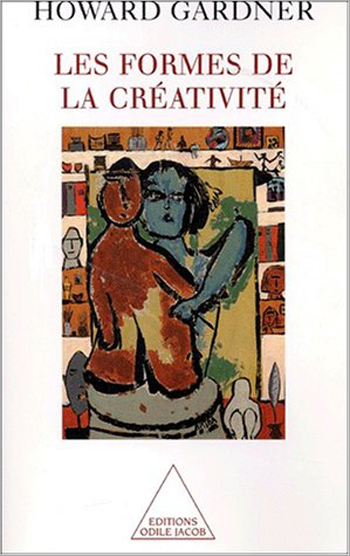
Howard Gardner
Creating Minds An Anatomy of Creativity Seen Through the Lives of Freud, Einstein, Picasso, Stravinsky, Eliot, Grah
What is creativity? Do there exist psychological traits common to all creative geniuses? Can one characterize creativity in different forms and in different areas? It is impossible to respond to these questions without examining variegated and specific cases of creative genius: artistic, literary, scientific and even political. Thus, Gardner proposes seven psychobiographies characteristic of each type of genius: Freud, Einstein, Picasso, Stravinsky, T.S. Eliot, Martha Graham, and Gandhi. What were the different paths that they chose? How did their creative spirits work? Howard Gardner is a cognitive psychologist.
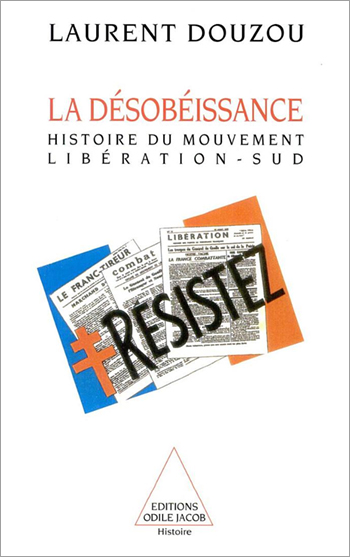
Laurent Douzou
Disobedience History of the Liberation Movement
Not everybody in the world become a Pétainist after the debacle and not all the resistance movements were infiltrated by communists working for the benefit of Moscow. Drawing upon numerous archives, Laurent Dazou explains why several men and women as diverse as a freewheeling navy officer, a normalien philosopher obsessed with maths, a young militant communist from the Latin Quarter and a founding banker from an anti-Semetic league, refused to crack under pressure, joining the ranks of disenchantment, and learning to resist by organizing themselves to fight and to blaze the trail of disobedience. Laurent Douzou is a specialist in the history of the Resistance.
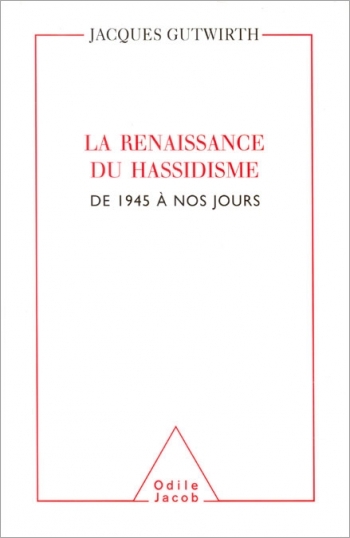
Jacques Gutwirth
The Rebirth of Hasidism, from1945 to the present
In 1945, there were 20,000 Hasidim in the world. Today, there are between 350,000 and 400,000, about half of whom live in Israel. This population explosion cannot be explained simply by demographic reasons. In France alone, it is estimated that there are 10,000 to 15,000 Lubavitch Hasidim, a small but particularly active community. Jacques Gutwirth paints a vivid picture of the major centres of Hasidism - Antwerp, New York, Jerusalem, Bne Brak and Paris. He describes the main aspects of Hasidism today, its spiritual and intellectual contributions, its recent history and the influence it has. Hasidism cannot be reduced simply to a religious conception, a way of expressing one's religion, or a particular lifestyle. Its rapid development is linked to current politics and global economics, to which in turn it also contributes. In this rigorous, balanced study of one of Judaism's most dynamic communities, the author provides solid information to further the discussion on the rise of religious fundamentalism. Jacques Gutwirth is an anthropologist and an honorary research fellow at the Centre National de la Recherche Scientifique (CNRS). A pioneer in the field of urban anthropology, he has taught at the University of Provence, in Aix, and at the University René Descartes, in Paris, as well as in Germany and the United States. He is the founder of the laboratory of anthropology at the CNRS. His first book, Vie Juive Traditionnelle, about a Hasidic community in Antwerp, is regarded as a classic. He is also the author of Les Judéo-Chrétiens Aujourd'hui and L'Eglise Electronique: La Saga des Télévangélistes
Paul Rabinow
French DNA: Trouble in Purgatory
This book offers some surprising viewpoints: an anthropologist tells the story of the human genome sequencing project; a scholar of the humanities follows the crisis between a French laboratory, the Centre dÉtude du Polymorphisme Humain (CEPH), and a U.S. rival; an American intellectual describes the politics within the French scientific community. This exceptional survey of the most recent research trends and of the state of international competition in the field of genetic research gives us a notion of how our future health care is being prepared. Paul Rabinow teaches anthropology at the University of California at Berkeley.
Ann Premack, David Premack
The Baby, the Ape and Man
The issue of the differences and similarities between humans and their cousins the chimpanzees governs the definition of human identity. How can this difference be explained? By studying the learning process of chimpanzees and comparing it to that of children, Ann and David Premack were gradually able to discover a series of differences, none of which were radical but when put together showed a yawning gap between the two species. The results they obtained enabled them to reconstruct little by little the sum of the differences that make up human identity. Ann and David Premack are specialists in the study of primates.
Samantha Besson
Inventing Europe Collège de France Autumn Colloquium 2021
This book was published under the direction of Samantha Besson, current occupant of the International Institutional Law Chair at the Collège de France
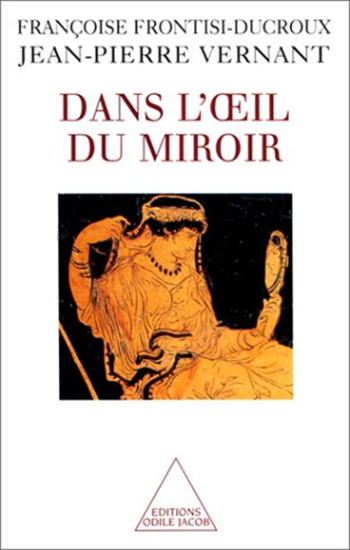
Jean-Pierre Vernant, Françoise Frontisi-Ducroux
In the Eye of the Mirror
How do the Greeks think of themselves ? Why do mirrors rarely reflect the true image of the person that looks into them ? And what image are they trying to project on others ? Formulated from an abundance of literature, iconography, and archeology, this book discusses the beginning foundations of individual representation. It is primarily a study of realities and appearances in an interpersonal society where social and personal status are dependant on how one is viewed and received in society. Secondly, the book analyses sexual identity and what it was in ancient Greece, through the study of a universal symbol, the mirror. Jean-Pierre Vernant and Françoise Frontisi-Ducroux teach at the College of France.
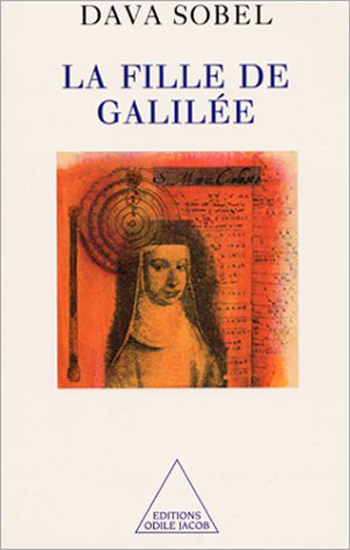
Dava Sobel
Galileos Daughter
This is a most unusual biography about Galileos daughter. Galileo Galilei (1564-1642) was regarded by Albert Einstein not only as the father of modern physics but as the father of all modern science. His eldest child, Virginia, mirrored Galileos own brilliance, industry and sensibility, and by virtue of these qualities became his confidante. Their correspondence, reproduced throughout the book, reveals their intense relationship, based on tender attachment and intellectual stimulation. The little-known life of Maria Celeste gives a human dimension to one of the major seventeenth-century scientists. His struggle with the Church is a lasting symbol of the conflict between science and religion. Galileos Daughter offers a powerful account of papal Rome and of Florentine intellectual life during the time of the Medicis. Dava Sobel is a writer who lives in New York