Catalog All books
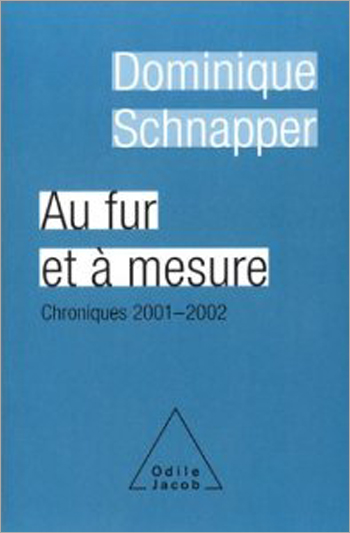
Dominique Schnapper
As Time Goes By A Chronical of 2001-2002
From a mythical meeting in the year 2000, to From our almost mythical appointment with the year 2000, to the presidential upheavals in 2003, this book presents the first expansive record of our entry into a new century. Through insightfully chronicling the passage of time, with both emotion and analysis, the author is able to present us with a picture of our contemporary world. Dominique Schnapper is a director of studies at the École des Hautes Études en Sciences Sociales.
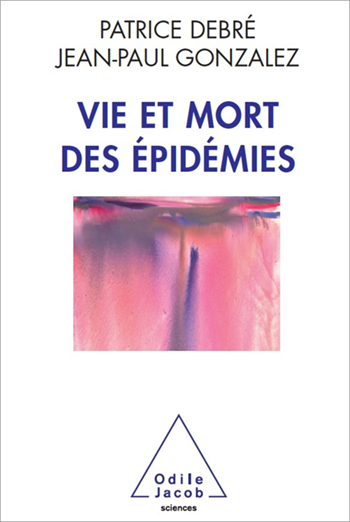
Patrice Debré, Jean-Paul Gonzalez
The Life and Death of Epidemics
A fascinating history of epidemics and the struggle to overcome them, from earliest times to the present
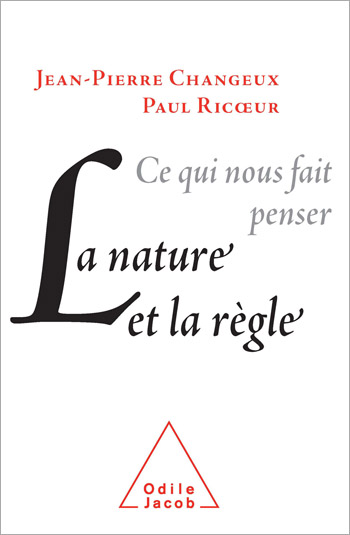
Jean-Pierre Changeux, Paul Ricœur
What Makes Us Think Nature and Rules
'The intention of this book was to put a scientist and a philosopher face to face and spark a dialogue between them on neuroscience, on their results and projects, and their ability to carry out a debate on ethics, its norms, and on peace. In France, ideas are rarely openly discussed. Serious debates are too often hindered by dogmatic statements, one-sided criticisms, incomprehensible discussions and glib mockery, with little or no thought for the solidity of the arguments, which aim only to appear plausible or worthy of being argued, rather than convincing. A totally free and open dialogue between a scientist and a philosopher is necessarily a highly unusual experience for both.' Paul Ricur and Jean-Pierre Changeux Paul Ricur is an honorary professor at the University of Paris-X and an emeritus professor at the University of Chicago. Jean-Pierre Changeux, a member of the French Academy of Science, teaches at the College of France and the Pasteur Institute.
Jacques Fournier
The Economics of Needs
France’s public service scrutinised by a high-ranking civil servant
Monique Dagnaud
The State and the Media
Can the control of television broadcasting be justified? Should a broadcasting policy that favours cultural diversity be defended? What are the ties between media bosses and politicians or administrators? Can it be said that the content of programming is governed by an elitist plot? How is French media control different from that of other countries? How did it develop and how can it be applied to on-line media? Is there a French model of broadcasting? How has it evolved? Who will win the battle that is now being waged: the citizens or the giant global groups? Monique Dagnaud is a sociologist
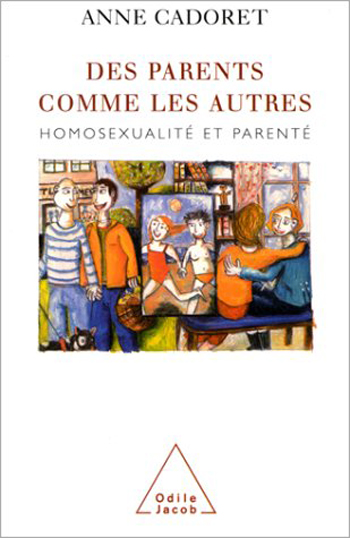
Anne Cadoret
Parents Like the Others Homosexuality and Parenting
There are numerous possible cases of homosexual parenting: How are these new types of family forged? What do homosexual parents seek? And what do they say about their experiences? Eschewing all ideological controversies, the author offers us an ethnological study of family structure which seriously calls into question the place of biology in parenthood and the identification of the parental with the conjugal couple. Anne Cadoret is a sociologist.
Jeanne-Marie Bréchot, Brigitte Joseph-Jeanneney, Martine Ruszniewski
Surrounding Illness The Family, the Doctor and the Psychologist
Should the same information be given to the sick person, and their family ? How can one get through the trauma day by day ? Should the entire truth be told? Should one prepare for mourning? How to say goodbye ? This book is a spontaneous and moving three-way discussion to help those faced with serious illness. Brigitte Joseph-Jeanneney is a general inspector of social affairs. Jeanne-Marie Bréchot is a thoracic cancer and lung specialist at the Hôtel-Dieu hospital, in Paris. Martine Rusniewsky is a psychologist working with patients in the palliative care ward at Hôpital de la Salpetrière, in Paris.
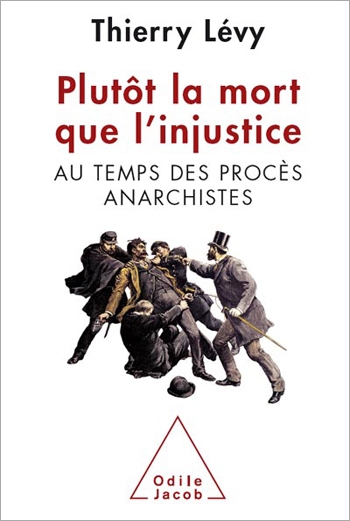
Thierry Lévy
Death Before Injustice The Era of Anarchist Trials
On 8 November 1892, a bomb went off in the staircase of a Paris police station. There was little doubt it had been the act of an anarchist...
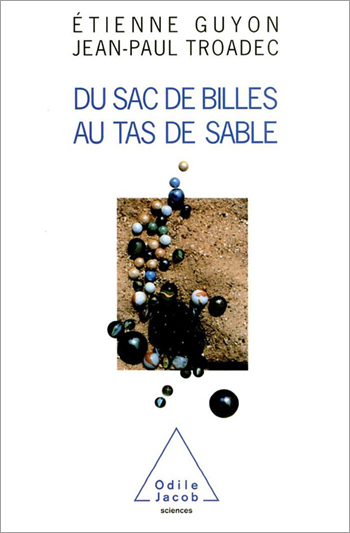
Étienne Guyon, Jean-Paul Troadec
From a Bag of Marbles to a Heap of Sand
Why don't sand dunes collapse? How does sand flow in an hourglass? How is it possible to empty a silo of all its wheat? What's a ceramic? The answer to all these questions can be found in the science of the complex organizations of matter, a science which is pluridisciplinary. Étienne Guyon, head of the École Normale Supérieure, and Jean-Paul Troadec, a researcher, present the characteristics of grain matter, the rules by which it is organized (in both crystal and fluid) as well as its movements (in silos as in avalanches).

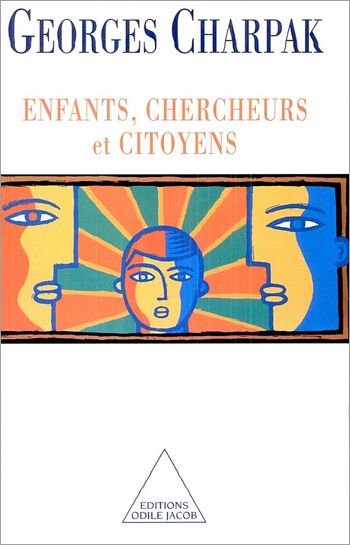
Georges Charpak
Children, Researchers and Citizens
Georges Charpak has taken the initiative for a complete reform of our methods of science teaching. He proposes a teaching method based on creativity and problem-solving, instead of the old theoretical, book-based approach. This book recounts the experiences of two teams of French educators in a research institution created by Leon Lederman in Chicago, and the lessons which we can take from their experiences. Pollens shows that to learn is to discover, and that it is in discovering that one learns. Georges Charpak is a Nobel laureate in physics, and the author of La vie à fil tendu and Feux follets et champignons nucléaires, both published by Editions Odile Jacob.

Jean-Marc Daniel
8 Lessons in Economic History
A masterly lesson in economics based on history and examples
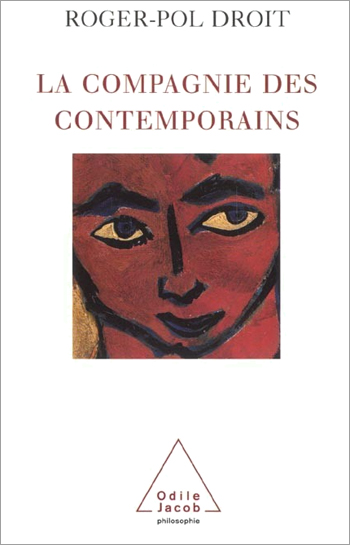
Roger-Pol Droit
The Company of Contemporaries
In this book, Droit reviews the works of some major contemporary thinkers: Bourdieu, Foucault, Girard, Habermas, Lévi-Strauss, Serres, and Vernant, among others. The interviews included here allow the reader to encounter biologists and sociologists, as well as anthropologists and psychoanalysts. Philosophers are well represented, but all the humanities have been included, and practically all major contemporary issues are considered, from bio-ethics to the end of history, from the construction of Europe to the rise of violence, from globalisation to the environment, from the development of science to political and religious extremism. Roger-Pol Droit is a philosopher and researcher at the Centre National de la Recherche Scientifique.

Dominique-Adèle Cassuto
What’s for Dinner? Teen Nutrition, from A to Z
A practical A to Z to help parents understand teenage eating habits and encourage healthy nutrition
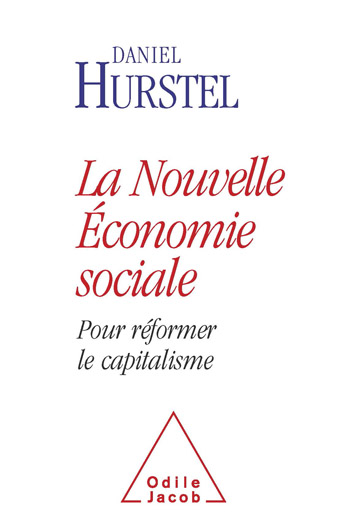
Daniel Hurstel
Socially Conscious Enterprises In Defence of Diversified Capitalism
The author argues that it is time to promote a new form of capitalism founded on socially conscious enterprises pursuing social goals though set up like other members of the business sector.
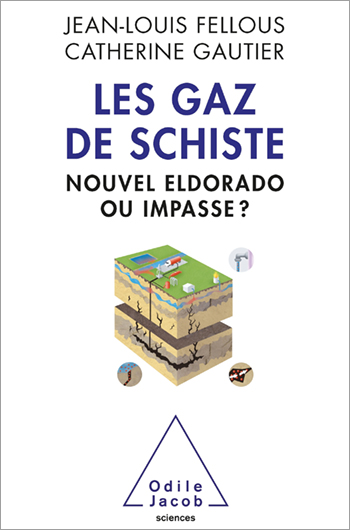
Jean-Louis Fellous, Catherine Gautier
The Gazs Shale New Eldorado or Impasse ?
Global problems related to the interaction of humans with their environment are multiplying: climatic upheaval, oil crisis, energy policies that are too lenient on carbon emissions
