
Catalog All books

Michel Craplet
Alcohol, the Foremost Addiction Overcoming a Chronic Illness
Alcoholism remains a major subject in public health, much more toxic than drug addiction

Max J. Skidmore, Marshall Carter Tripp
American Democracy
What do we really know about the United States? A superpower that fascinates for its success and irritates by its arrogance, this immense country is nonetheless an extraordinary political invention, a real laboratory of democracy. This book describes the functioning of the American regime, whose essence is that of being a perpetual creation.
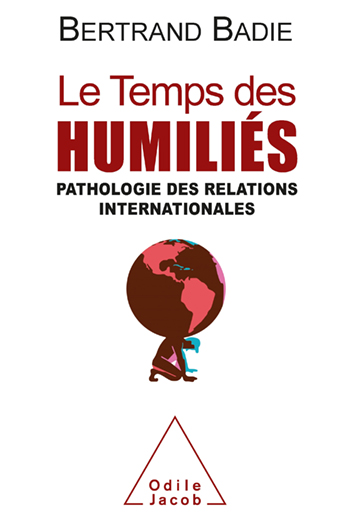
Bertrand Badie
The Age of Humiliation Pathology International Relations
A brilliant thinker who is widely known in the French media, Bertrand Badie offers an original view of international relations at the junction of individual and collective concerns.

Olivier Bouvet de la Maisonneuve
Narcissus and Oedipus Go to Hollywood Psychoanalysis with Depression
Art and creativity can help us understand depression and how the psyche works
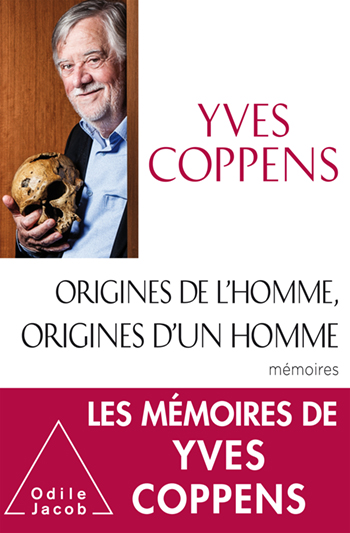
Yves Coppens
Origins of Man: Origins of a Man Memoirs
Richly illustrated, the memoirs of a great paleontologist, a man of exceptional breadth and an indefatigable story-teller, world-renowned prehistorian, and award-winning French scientist. The story of a life dedicated entirely to studying, explaining, reconstituting, understanding, telling about, and conveying the history of human beings, and the mystery of our origins.
Académie d'agriculture de France
The Big Book of Trees and Forests Draw a forest for me
In the same vein as the Grand livre de notre alimentation [The Big Book of Food], this book responds to all our questions on forests.

Michel Aglietta, Guo Bai, Camille Macaire
The End of the Hegemony of the Dollar
Fascinating developments on the most innovative elements of Chinese finance and its digital economy.
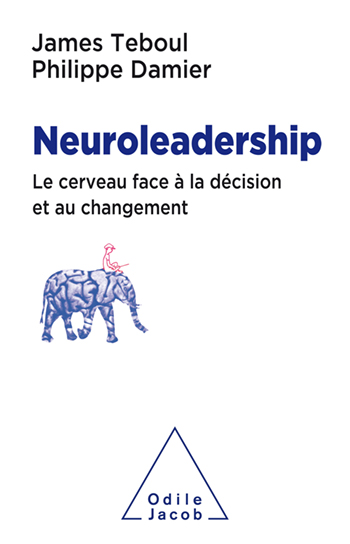
James Teboul, Philippe Damier
NeuroLeadership Challenges to the brain in the face of decision and change
An analysis of the brain with a focus on corporate action aimed at helping executives and managers to make better decisions, to remain calm under pressure, to work better with others and to acquire the necessary flexibility



Christophe André
Come Meditate with Us Meditation with the Experts
Assembled for the first time in a single volume, twenty-one leading figures in the world of meditation, who share their meditation secrets, including their doubts and the difficulties they, themselves, have encountered.


Gérard Liger-Belair
The Science of Champagne
In this fascinating book, Gérard Liger-Belair delves into the inner workings of champagne and pierces its mysteries...
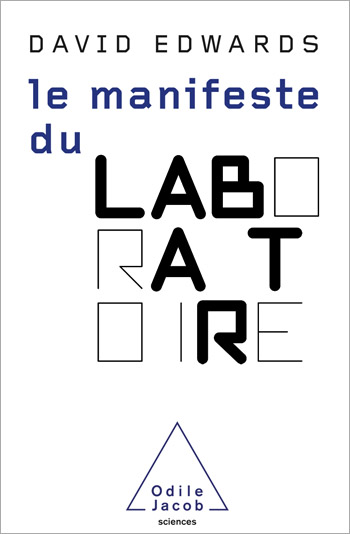
David Edwards
The Laboratoire’s Manifesto
The present work is about a very special kind of laboratory, which he founded and where creators and society can use the language of culture to communicate and to discover a new springboard for innovation.

Bernard Lewis
Faith and Power Religion and Politics in the Middle East
One of the greatest experts on the Middle East revisits the great question of Islam and its clash with the West
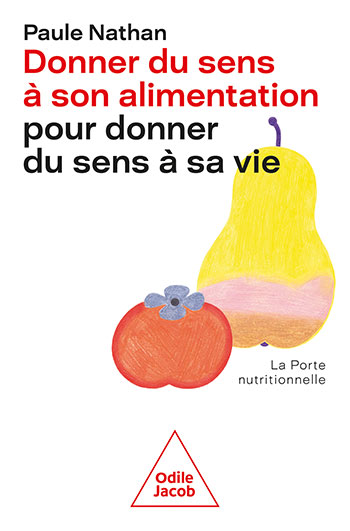
Paule Nathan
Giving Meaning to Your Food to Give Meaning to Your Life
A spiritual journey starting with your relationship with food and being aware of what it means to eat.

Lauric Henneton
The End of the American Dream?
A book that helps understand the history of the United States and American society today.
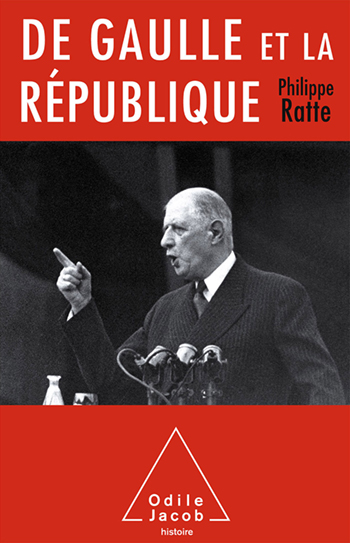
Philippe Ratte
De Gaulle and the Republic
A decisive speech for the history of France. A history lesson from an exceptional moment of founding and reform. An analysis of the founding of the Fifth Republic. A close look at what Gaullism was.

Jean-François Muracciole , Lucie Muracciole
The True Novel of the Free French People Another way of reading and understanding history
A gallery of portraits of the men who decided to join the Resistance and follow de Gaulle, who at the time was completely unknown. Fictional history and Great History come together to weave a surprising tale of the Resistance.

Barbara Demeneix
Toxic Cocktails How Endocrine Disrupters Are Poisoning Our Brains
Written for the general reader, the book is startling as it reveals the scandalous damage to our brains being caused by chemical pollution. Concrete measures, scientifically proven, to put an end to the tragic mistakes that have been committed in Western countries for over fifty years.
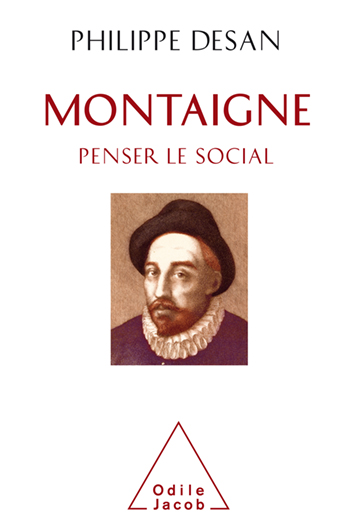
Philippe Desan
Montaigne Thinking about the Social
A study destined to become a work of reference, one that will be required for all courses on Montaigne.

François Lévêque
Imperfect Competition
A very wide diversity of examples taken from all sectors. Very educational, well written, and easy to understand, this book is also an economics lesson for Dummies.



Philippe Moati
The Future of Large-Scale Distribution
Few phenomena have changed our urban centres as much as the birth of large-scale distribution: our towns ans cities have been transformed, as have our methods of purchasing, and even our places of social interaction have moved. This is perhaps only the beginning. In this book, Philippe Moati reviews the development of large-scale distribution during the three decades of prosperity that followed World War II and the economic crisis that succeeded them. He analyses the problems encountered by large-scale distribution today and examines the development strategies that are currently being put into practice and the revolutions which are perhaps to come. Philippe Moati teaches economics at the University of Paris-VII and is a director of research at CREDOC.
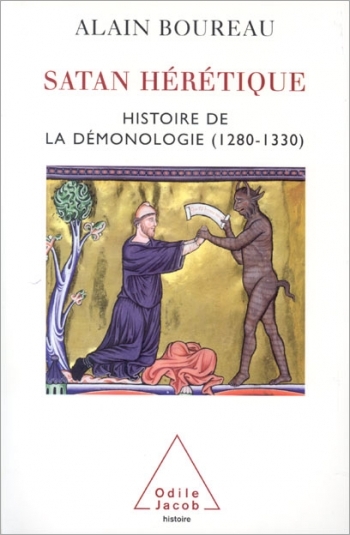
Alain Boureau
Satan, the Heretic History of demonology in Medieval Europe, 1260-1350
Alain Boureau is one of the most original French medievalists. In his earlier, best-selling book on the droit du seigneur, he showed that such a custom had never actually existed. The present work is not about Satan and Satanism, but about the birth of demonology, i.e. about the demons that inhabit Satan's Court - a fascinating topic for a medievalist. Before the end of the thirteenth century, theology had shown little interest in demons, according to Boureau. But Saint Thomas Aquinas' Treatise on Evil, written in 1272, changed all this. Boureau tries to find an explanation. He is not concerned with why people believe in demons - he has not written a social history of demonology. Instead, he sets out to understand why theologians became interested in the subject - for this is a history of theological ideas about demons. The author summarises his explanation as follows: I propose that the date of the invention of demonology be moved forward by more than a century, not because a new doctrine was established and enforced then, as was the case in the fifteenth century, but because of the considerable procedural changes that assimilated witchcraft and invocations of the devil with the crime of heresy, which in turn led to new legal developments and more revelations. In addition, the injection of doctrinal content into the ancient theme of the devil's pact explained demoniac activity in the world. The issue that lies at the heart of these discussions about a pact with the devil, evil and evidence is obviously the emergence of our legal system. Alain Boureau is a director of studies at the Ecole des Hautes Etudes en Sciences Sociales.
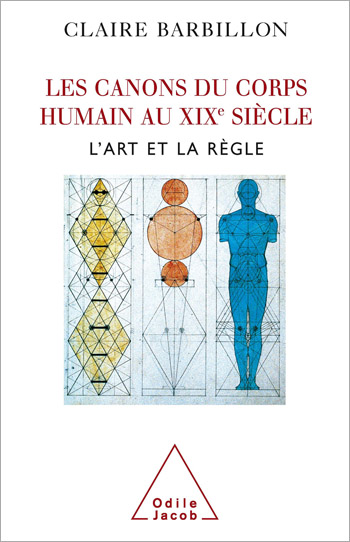


Françoise Héritier, Margarita Xanthakou
Body and Affects
The articles gathered here, written by eminent French anthropologists, present a novel angle on the way societies function. The writers argue that because societies are not abstract intellectual constructions, they cannot be dissociated from the physical individuals that constitute them, or from the affects (feelings and emotions) expressed by them. Included here are studies of Western and non-Western societies on such subjects as skin colour, religious rituals involving animals, witchcraft and flying sorcerers, passion in traditional North African cultures, and breast-feeding (both induced lactation to breastfeed infant girls and spontaneous lactation to breastfeed infant boys) in parts of Italy. Françoise Héritier is an anthropologist and teaches at the Collège de France. She is the author of Les Deux Soeurs et leur mère and Masculin/Féminin I and II, published by Editions Odile Jacob. Margarita Xanthakou, an anthropologist, is a research fellow at the Centre National de la Recherche Scientifique (CNRS).