
Catalog All books
Ginette Raimbault
When a child disappears
When a child disappears, the parents of that child have to first of all relearn how to live their lives. How can they face up to this task ? What routes, both conscious and subconscious do they take in order to do this ? Ginette Raimbault explores the mental processes of these devastated parents using the spontaneous testimonies of those who have relied on writing to get them through their bereavement such as Victor Hugo who mourns Léopoldine, and Isadora Duncan and Geneviève Jurgensen who both lost two children at once. Through the anguish of these famous examples, this book movingly asks the universally relevant question : what does a child mean for the parent ?
Paul Rabinow
French DNA: Trouble in Purgatory
This book offers some surprising viewpoints: an anthropologist tells the story of the human genome sequencing project; a scholar of the humanities follows the crisis between a French laboratory, the Centre dÉtude du Polymorphisme Humain (CEPH), and a U.S. rival; an American intellectual describes the politics within the French scientific community. This exceptional survey of the most recent research trends and of the state of international competition in the field of genetic research gives us a notion of how our future health care is being prepared. Paul Rabinow teaches anthropology at the University of California at Berkeley.
Lluis Quintana-Murci
The Human People On the genetic traces of migrations, crossbreeding and adaptations
A fascinating overview of what we have learned from genomics, after two decades of amazing progress: an unprecedented leap forward in our knowledge of human diversity and its history.
Vinciane Pirenne-Delforge, Lluis Quintana-Murci
Civilizations: Questioning Identity and Diversity: Autumn Colloquium of the Collège de France
The noun “civilization” entered Western European vocabulary in the Eighteenth Century, and at that time denoted a stage of material, social, and cultural evolution...
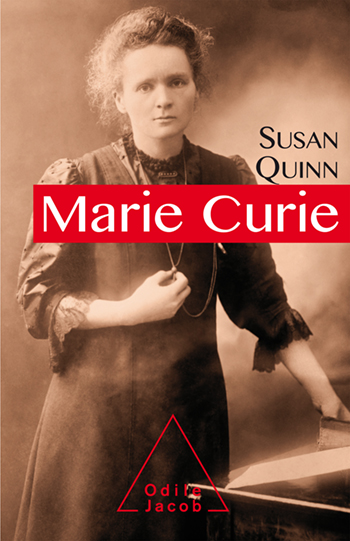
Susan Quinn
Marie Curie New édition
Going beyond the legend, this biography, entirely based on documents in the archives, brings alive the picture of a captivating woman, whose life reads like a novel. Susan Quinn is a biographist and journalist.
Yves Quéré
On Beauty Twenty-Six Ariettas
Does beauty reside in aesthetic contemplation, intellectual depth, technical achievement? Twenty-six intersecting miscellanea for intellectual happiness.
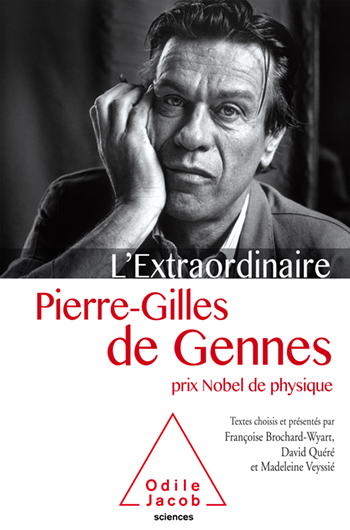
Françoise Brochard-Wyart, David Quéré, Madeleine Veyssié
Incredible Mister Pierre Gilles de Gennes Memories
A revival of "The French Feynman" through selected pieces, most of them previously unpublished. Scientific curiosity knows no borders; sharing it can abolish them.
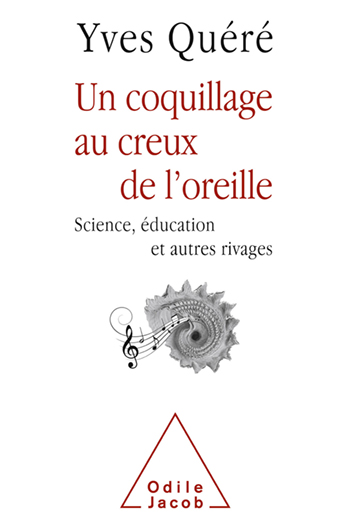
Yves Quéré
A Shell in the Middle of the Ear Science, Education, and Other Shores
Written with happiness, with multiple formulations and aphorisms, this book is an invitation to meditate on the beauties and contradictions of life.

France Quéré
Ethics and Life
The recent advances in life sciences have modified our knowledge about the nature of man. Genetic engineering has given us a certain power over his future. Which principles must preside over artificial procreation and organ donation? How far can we allow genetic engineering and medical experimentations to go? What are the moral and ethical barriers of human science?
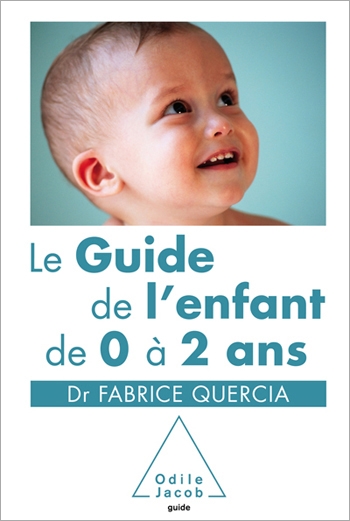
Fabrice Quercia
The ABC of Infant Care
A practical guidebook covering every aspect of an infant’s life, from 0 to 2 years, for today’s parents
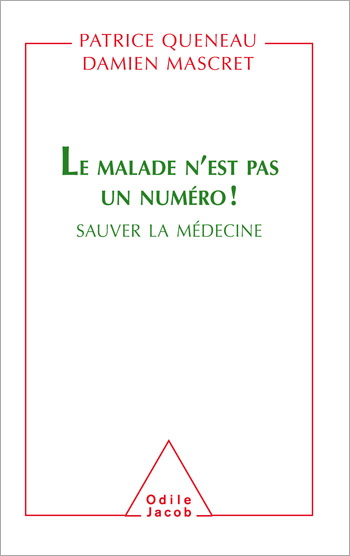
Patrice Queneau, Claude de Bourguignon
Saving the General Practitioner
A powerful argument for keeping medicine human, citing the general practitioner as the guarantor. A book that can contribute to the debate on healthcare, and one that will find a favourable reception among general practitioners.



Libby Purves
How Not to be a Perfect Mother
Are you one of those perfect mothers or are you a real mother? Perfect mothers always smile, always have immaculate homes, never raise their voices....
Libby Purves
How Not to Raise Perfect Children
All parents want to raise exceptional children : well-balanced, healthy, clean behind the ears and gifted for everything...
Libby Purves
How Not to be a Perfect Family
Perfect families, as we know, live in perfectly kept houses, have admirably well-organized vacations...
Libby Purves
How Not to Be a Perfect Mother
Are you a perfect mother or a real mother? Perfect mothers are forever smiling, their homes are immaculate, and they never raise their voices.
Stanley B. Prusiner
The Madness and Memory The Discovery of Prions — A New Biological Principle of Disease
Stanley B. Prusiner’s fascinating discovery, which revolutionised medicine
Joëlle Proust
Thinking Fast or Thinking Well
By revealing the individual and social implications of cognitive functioning, an overview of up-to-date knowledge enabling us to understanding our thinking and to control it more in practice.

Patrick Boucheron, Alain Prochiantz
Migrants, Refugees, and Exile Colloquium at the Collège de France
The timeliness of the issue of migratory movement and the displacement of populations. The multi-disciplinary nature of the studies, which bring together history and geography, geopolitics, psychology, as well as law and economics.
Alain Prochiantz
Biology in the Bedroom
Inspiring himself from La Philosophie dans le boudoir by Sade and the major philosophical works of the 18th century, Alain Prochiantz, who is a neurobiologist, explains by means of a dialogue, the progress of embryology and neurobiology and gives us the elements so that we can understand and measure the stakes of the recent discovery of the genes of development. Alain Prochiantz heads the Laboratory for the Development and Evolution of the Nervous System at the École normale supérieure. He is notably the author of Strategies of the Embryo, and Claude Bernard, the Physiological Revolution.